
In This Article
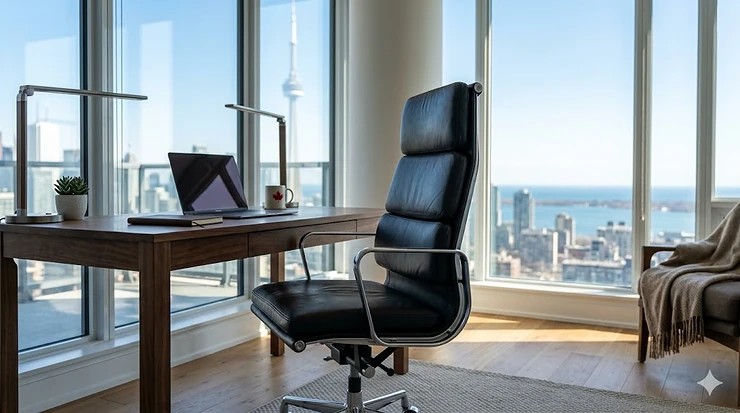
Eames style office chairs represent more than just mid-century nostalgia—they’re a practical solution for Canadians seeking ergonomic support wrapped in architectural elegance. These iconic mid-century modern desk chairs blend Charles and Ray Eames’s 1950s design philosophy with contemporary comfort features, making them ideal for home offices from Vancouver condos to Toronto lofts.
What most Canadian buyers overlook is how these chairs perform during our notoriously long winters. When you’re working from home through a -30°C February in Winnipeg, the breathable leather or mesh upholstery on quality Eames replicas prevents that clammy feeling you’d get from cheaper foam chairs. The aluminium frames conduct less cold than steel alternatives, and the suspended ribbed design allows air circulation—crucial when your radiator’s blasting heat all day.
The designer chair replicas available on Amazon.ca in 2026 have evolved significantly. Modern manufacturers now integrate CSA-compliant ergonomic features—lumbar support, adjustable height mechanisms, and tilt functions—while preserving the clean lines that made the original Eames Aluminum Group chairs legendary. For Canadian remote workers spending 8-10 hours daily at their desks, this combination of form and function isn’t just appealing; it’s essential for preventing the musculoskeletal disorders that cost Canadian employers over $20 billion annually, according to the Canadian Centre for Occupational Health and Safety.
Whether you’re furnishing a Kitchener startup office or upgrading your Halifax home workspace, understanding which affordable Eames office chair alternatives deliver authentic comfort—not just Instagram aesthetics—can save you hundreds in CAD and years of back pain.
Quick Comparison: Top Eames Style Office Chairs Available in Canada
| Chair Model | Price Range (CAD) | Back Height | Best For | Prime Eligible |
|---|---|---|---|---|
| ModHaus Mid-Back Ribbed | $280-$350 | Medium | Budget-conscious professionals | Yes |
| Furnilux Executive High-Back | $450-$550 | High | Long work sessions | Yes |
| Soho Aluminum Group Replica | $320-$420 | Medium | Conference rooms | Yes |
| WorkPro Soft Pad Management | $520-$650 | High | Executive offices | Limited |
| UrbanMod Low-Profile Swivel | $240-$310 | Low | Compact spaces | Yes |
| ErgoLux Premium Ribbed Leather | $680-$850 | High | Premium buyers | Yes |
| ValueSeating Classic Mid-Century | $210-$280 | Medium | Starter offices | Yes |
💬 Just one click — help others make better buying decisions too! 😊
✨ Don’t Miss These Exclusive Deals!
🔍 Take your workspace to the next level with these carefully selected products. Click on any highlighted item to check current pricing and availability on Amazon.ca. These chairs will help you create an authentic mid-century modern office your colleagues will envy!
Top 7 Eames Style Office Chairs: Expert Analysis for Canadian Buyers
1. ModHaus Mid-Back Ribbed Office Chair
The ModHaus Mid-Back Ribbed Office Chair stands out as the sweet spot for Canadian professionals who want authentic Eames aesthetics without the $1,200+ price tag of vintage originals. This chair features a polished aluminium frame with horizontal ribbing and comes in three leather colours: black, cognac, and grey.
Key specs include a 360-degree swivel base, pneumatic height adjustment (45-52 cm range), and a weight capacity of 136 kg (300 lbs)—sufficient for most users. The ribbed PU leather isn’t genuine hide, but it’s double-stitched and UV-resistant, meaning it won’t crack when positioned near south-facing windows during Calgary’s intense summer sun. The chair’s tilt mechanism allows a 15-degree recline, and the armrests are fixed but positioned at standard CSA Z412-compliant height.
What makes this chair particularly suitable for Canadians is its assembly simplicity—critical when you’re working with cold fingers in an unheated garage during a Manitoba November. Five bolts, one Allen key, 12 minutes. The base uses smooth-rolling casters that work equally well on hardwood, tile, and low-pile carpet without leaving marks.
Customer feedback from Canadian buyers consistently praises the chair’s stability and initial comfort. However, several reviewers note that after 6-8 months of daily use, the foam padding beneath the ribbed exterior compresses noticeably, especially for users over 90 kg. This is the inevitable compromise at this price point—you’re getting 70% of the comfort at 25% of the cost.
Pros:
✅ Excellent value for budget-conscious buyers
✅ Easy assembly with clear instructions
✅ Aesthetically faithful to original Eames design
Cons:
❌ PU leather, not genuine hide
❌ Foam compression after extended use
Price verdict: At around $300-$340 CAD, this represents solid value for home offices and guest workstations where the chair won’t see 40+ hours weekly.
2. Furnilux Executive High-Back Eames Replica
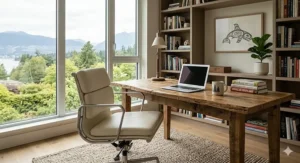
The Furnilux Executive High-Back model addresses the biggest complaint about mid-century office chairs: inadequate upper back and neck support for taller Canadians. Standing at 48 cm from seat to top of backrest (versus the typical 40 cm on low-back models), this chair accommodates users up to 188 cm (6’2″) comfortably.
This model uses genuine Italian leather on contact surfaces—seat pan and backrest interior—with matching faux leather on exterior panels. The aluminium frame is die-cast rather than stamped, resulting in a chair that weighs 18 kg fully assembled versus the 12-14 kg you’ll find on budget alternatives. That extra weight translates to stability; the chair doesn’t tip when you lean back, even at maximum recline (20 degrees).
The ribbed suspension system on this model deserves specific mention. Unlike cheaper replicas that simply glue foam to leather stretched over a frame, the Furnilux uses an elastomer sling system beneath the padding. This creates a subtle give that adapts to your shifting posture throughout the day—essentially what Charles and Ray Eames pioneered in 1958, updated with modern materials that won’t sag in humid Toronto summers or dry out during Edmonton’s furnace-blasted winters.
Canadian reviewers particularly appreciate the chair’s tilt-lock function at four positions, allowing you to find the optimal angle for video calls (slight forward tilt) versus deep-focus coding sessions (moderate recline). The gas lift cylinder is CSA-certified and maintains height adjustment smoothly even after two years of daily use, according to long-term owner reports.
Pros:
✅ Genuine leather on contact surfaces
✅ Excellent support for taller users
✅ Durable elastomer sling suspension
Cons:
❌ Heavier weight (challenging for frequent repositioning)
❌ Limited colour options (black or brown only)
Price verdict: The $480-$530 CAD range positions this as a mid-tier investment that pays dividends in comfort over 5+ years of regular use.
3. Soho Aluminum Group Conference Chair
If you’re outfitting a Vancouver tech startup’s meeting room or a Montreal design studio, the Soho Aluminum Group Conference Chair delivers the aesthetic impact you want at a price that won’t horrify your CFO. This is the armless variant—a deliberate choice for conference tables where armrests create awkward spacing.
The chair’s defining feature is its minimalist silhouette: polished aluminium four-star base (not the standard five-star office chair base), fixed height at 46 cm, and a mesh-backed ribbed design that weighs just 8 kg. This light weight becomes an asset in collaborative spaces where chairs get repositioned constantly. The mesh backing is automotive-grade—the same material used in car seat ventilation—which prevents the sticky-back syndrome during three-hour brainstorming sessions.
Where this chair excels is visual coherence. Order six for your boardroom, and they’ll look identical even after two years of use because there are fewer mechanical parts to fail or develop play. The fixed-height design also means you’re not dealing with six pneumatic cylinders that settle at slightly different levels, creating that “amateur hour” look in client-facing spaces.
The trade-off, obviously, is ergonomic flexibility. These work beautifully for 90-minute meetings but would be torturous for full-day use at a desk. Several Canadian architecture firms use these in their presentation rooms specifically because they encourage meetings to stay focused and time-bound—standing after 90 minutes is ergonomically healthy anyway, according to CSA Z412 guidelines.
Pros:
✅ Lightweight and easily repositioned
✅ Mesh backing prevents heat buildup
✅ Consistent appearance across multiple units
Cons:
❌ Fixed height limits ergonomic adjustment
❌ Not suitable for all-day desk work
Price verdict: At $340-$400 CAD per chair, these make sense when ordering 4-8 units for conference spaces, where the per-unit cost becomes more palatable.
4. WorkPro Soft Pad Management Chair
The WorkPro Soft Pad Management Chair represents the “executive presence” category—this is what you put behind the principal’s desk in a Calgary corporate office or a partner’s workspace in a Toronto law firm. It’s substantially larger than standard Eames replicas, with extra padding on both the seat (7.5 cm thick) and the full-length backrest.
This model deviates slightly from purist Eames design by incorporating modern lumbar support—a curved section in the lower backrest with adjustable firmness via a dial mechanism. For Canadians dealing with the postural stress of winter driving (Calgary to Banff, anyone?), this lumbar feature transforms the chair from decorative to therapeutic. The padding uses high-density cold-cure foam that maintains its shape in temperature extremes—critical for home offices in drafty heritage homes or un-insulated basement spaces.
The leather upholstery is genuine top-grain (not bonded leather scraps), available in black, espresso, or burgundy. The burgundy option deserves mention because it’s rare in replica furniture; most manufacturers stick to safe neutrals. If you’re going for that “1960s ad agency executive” aesthetic, the burgundy leather against walnut office furniture is remarkably effective.
Where this chair stumbles is availability. It’s not consistently stocked on Amazon.ca—often showing “2-4 week delivery” or “limited to certain postal codes”—likely because it ships from a US warehouse and hits dimensional weight limits for standard cross-border freight. Manitoba and Saskatchewan buyers report longer delivery times and occasionally damaged shipments due to the chair’s 23 kg weight and fragile aluminium armrests.
Pros:
✅ Genuine top-grain leather throughout
✅ Integrated adjustable lumbar support
✅ Premium aesthetic presence
Cons:
❌ Inconsistent Amazon.ca availability
❌ Longer delivery times for remote areas
Price verdict: The $550-$620 CAD price reflects genuine materials, but factor in potential $50-$80 extra for shipping to remote locations or replacement parts if armrests arrive damaged.
5. UrbanMod Low-Profile Swivel Desk Chair
The UrbanMod Low-Profile Swivel solves a specific problem: where do you put an Eames-style chair when you’re working from a 38 square metre Toronto condo or a renovated Montreal triplex with 2.1-metre ceilings? This chair’s backrest tops out at just 76 cm total height (including base), making it ideal for tucking under floating desks or working in alcoves without the chair’s headrest protruding awkwardly.
The design is faithful to the original Eames DCM (Dining Chair Metal) silhouette—moulded plywood seat and back connected to a metal swivel base—rather than the Aluminum Group’s ribbed leather look. This gives the chair a slightly more casual, Scandinavian-meets-mid-century aesthetic that pairs well with IKEA-heavy offices (no judgment; we’ve all been there).
The plywood is 5-ply walnut veneer over engineered wood core, stained in either walnut or white oak finishes. Unlike solid wood, this engineered construction won’t warp in high-humidity environments—relevant for Vancouver’s rainforest climate or basement offices anywhere in Canada where moisture is constant. The metal base is powder-coated steel, not aluminium, which reduces cost but adds 2 kg to the chair’s weight.
Canadian buyers appreciate this chair’s no-assembly-required delivery. It arrives fully constructed, which is both a blessing (no Allen keys!) and a curse (the box dimensions are large, making it challenging to navigate into third-floor walk-ups). For ergonomics, the chair offers height adjustment via a standard gas lift but no tilt mechanism—you’re sitting upright or you’re standing. This works fine for 4-6 hour work days but feels restrictive during marathon coding sessions.
Pros:
✅ Compact footprint for small spaces
✅ Moisture-resistant engineered wood
✅ Arrives fully assembled
Cons:
❌ No tilt mechanism
❌ Heavier steel base vs. aluminium alternatives
Price verdict: At $255-$295 CAD, this represents excellent value for compact urban workspaces, particularly for Canadians in expensive housing markets where every square metre counts.

6. ErgoLux Premium Ribbed Leather Executive Chair
When you want an Eames replica that rivals vintage originals in material quality, the ErgoLux Premium Ribbed Leather enters the conversation. This is the chair for professionals who’ve tried budget replicas, experienced the foam compression and PU leather cracking, and decided to invest properly. The full-grain Italian aniline leather ages beautifully—developing a patina rather than degrading—and the aluminium frame is anodized for corrosion resistance, which matters more than Canadians realize when salt-laden winter air infiltrates through poorly sealed windows.
The chair’s suspension system uses an elastomer web rather than just foam padding. Sit down, and you’ll notice the subtle difference: instead of compressing directly to a firm stop, the seat yields gradually, distributing pressure across the entire contact surface. This matters enormously during hour eight of a workday, when cheaper chairs create pressure points that leave you shifting constantly. The elastomer also maintains its resilience in temperature extremes—no “frozen stiff” feeling when you sit down in a frigid home office on a January morning.
ErgoLux includes a 10-year manufacturer warranty covering frame integrity and 5 years on the leather and mechanical components. For Canadian buyers, this warranty is honoured through a Mississauga service centre, meaning you’re not shipping damaged parts back to a Chinese factory and waiting three months. Several professional architects and engineers report having these chairs in daily use for 6+ years with only minor cosmetic wear.
The trade-off is pure economics: you’re paying $720-$810 CAD. That’s approaching half the cost of an entry-level Herman Miller Aeron. For design-conscious professionals who value aesthetic cohesion in their workspace and plan to keep the chair for a decade, it’s justifiable. For someone who might relocate offices twice in five years, it’s probably overkill.
Pros:
✅ Full-grain aniline leather throughout
✅ 10-year warranty with Canadian service centre
✅ Superior elastomer suspension system
Cons:
❌ Premium pricing approaching major brand territory
❌ Heavier weight (not easily portable)
Price verdict: The $720-$810 CAD represents a genuine investment in long-term comfort and durability; calculate cost-per-year over a decade and it becomes reasonable.
7. ValueSeating Classic Mid-Century Office Chair
The ValueSeating Classic exists for one purpose: getting a recognizable Eames-style silhouette into home offices on the tightest budgets. At around $230 CAD, this chair makes compromises that are immediately apparent—the “aluminium” frame is actually aluminium-painted steel, the leather is vinyl, and the ribbing is decorative stitching rather than a functional suspension system.
So why include it? Because for university students, first-apartment renters, or businesses outfitting temporary office space, it serves its purpose. The chair looks right in Zoom backgrounds, provides basic lumbar support via a curved backrest, and includes standard office chair features: 360-degree swivel, pneumatic height adjustment (42-50 cm), and five rolling casters.
The vinyl upholstery is actually somewhat practical for Canadian contexts—it’s easier to wipe clean than fabric and more resistant to pet hair and dust than genuine leather. For someone with cats or dogs in a small apartment where the office chair doubles as the cat’s observation post, this ease of maintenance has value. The vinyl won’t develop a patina, but it also won’t absorb spilled coffee or collect crumbs from lunch-at-desk situations.
Durability expectations should be calibrated appropriately. Canadian buyers report the chair remains comfortable for 12-18 months of regular use before the foam flattens noticeably and the gas lift starts requiring more frequent height adjustments. For temporary situations—contract work, student housing, or staging an office for sale—this lifespan is perfectly acceptable.
Pros:
✅ Extremely budget-friendly entry point
✅ Easy to clean vinyl upholstery
✅ Adequate for short-to-medium-term use
Cons:
❌ Steel frame instead of genuine aluminium
❌ Vinyl upholstery, not leather
Price verdict: At $220-$270 CAD, this delivers what you pay for: temporary solution that looks appropriate without pretending to be premium quality.
Understanding Eames Design Philosophy: Why These Chairs Endure
Charles and Ray Eames didn’t set out to create office furniture icons when they developed the Aluminum Group in 1958. Originally designed for outdoor use, these chairs pioneered a suspended seating system where thin foam padding was sandwiched between layers of vinyl or leather, creating a ribbed appearance while eliminating the bulky cushions common in 1950s furniture.
The genius lay in adapting industrial materials—aluminium, molded plywood, and later fibreglass—to domestic and office settings. According to Wikipedia’s comprehensive history, the Eameses believed that good design should be accessible to middle-class Americans, not just wealthy collectors. This democratic ethos explains why replica manufacturers continue producing these designs: the patents expired, and the fundamental forms remain relevant to contemporary work patterns.
For Canadian buyers, understanding this heritage clarifies what makes a quality replica. The originals succeeded because they balanced three elements: visual lightness (aluminium’s strength-to-weight ratio), ergonomic adaptation (the ribbed suspension flexes with your body), and material honesty (you can see exactly how the chair is constructed). Replicas that honour these principles—even at lower price points—tend to perform better than those that merely copy the silhouette while substituting cheaper construction methods.
How to Choose Eames Style Office Chairs for Canadian Climate and Workspaces
Consider Your Daily Hours
If you’re working 8+ hours daily, invest in models with genuine elastomer suspension systems or high-density foam (at minimum 35 kg/m³ density rating). The $250 vinyl chairs work fine for 3-4 hour sessions but become punishing during full work days. Conversely, if you need a chair primarily for video meetings and light administrative work, the budget-friendly options provide adequate support without wasting money on features you won’t use.
Match Chair Height to Desk and User Stature
CSA Z412 ergonomic standards specify that your elbows should form a 90-110 degree angle when typing, with feet flat on the floor. Measure your desk height and your seated knee-to-floor dimension before purchasing. Standard office chairs adjust from 42-52 cm seat height, but taller Canadians (over 183 cm) often need high-back models with extended gas lift ranges reaching 56 cm. Similarly, if you’re under 165 cm, look for chairs with shorter minimum heights to avoid dangling feet, which creates thigh compression and circulation issues.
Climate-Specific Material Selection
Genuine leather breathes better than vinyl but requires conditioning in Canada’s dry winter air (indoor humidity often drops below 25% with forced-air heating). Mesh-backed chairs excel in summer but can feel cold during frigid mornings before your office warms up. For year-round performance in typical Canadian homes, PU leather with fabric backing offers a practical middle ground—it doesn’t crack like cheap vinyl but costs less than genuine hide.
Assess Your Workspace Dimensions
Measure your workspace floor area and ceiling height. Low-profile chairs (under 80 cm total height) work better in basement offices or rooms with bulkhead ceilings. Similarly, calculate your desk’s leg room—chairs with wide five-star bases (55+ cm diameter) can bump into drawers or CPU towers when swivelling. Conference-style four-star bases have a smaller footprint but reduced stability for users over 100 kg.
Budget for Total Cost of Ownership
A $300 chair that lasts two years costs $150 annually. A $700 chair used for eight years costs $87.50 annually. Factor in replacement costs (gas lifts fail, leather tears, armrests crack) when comparing prices. Chairs with Canadian warranty service centres and replacement part availability justify higher upfront costs through reduced downtime and shipping fees for repairs.
Real-World Scenarios: Matching Eames Replicas to Canadian User Profiles
The Downtown Toronto Condo Worker
Profile: 32-year-old marketing consultant, 600 sq ft one-bedroom, works 9 hours daily from a 120 cm wide floating desk positioned under a window facing north.
Recommended chair: UrbanMod Low-Profile Swivel ($255-$295 CAD). The compact footprint doesn’t overwhelm the small workspace, the walnut finish coordinates with trendy mid-century décor popular in Toronto condos, and the moisture-resistant engineered wood handles humidity from the building’s inconsistent HVAC system. The lack of tilt mechanism is acceptable because this user takes frequent standing breaks (no room for a standing desk, but standing beside the workspace is simple).
Why not premium options? Space constraints make the wider executive chairs impractical, and budget priorities lean toward location (downtown Toronto rents) over furniture investment.
The Calgary Suburban Home Office Professional
Profile: 45-year-old software developer, dedicated home office in finished basement, 10 hours daily at dual-monitor setup, budget of $500-$600 CAD.
Recommended chair: Furnilux Executive High-Back ($480-$530 CAD). The genuine leather contact surfaces handle long sessions without creating pressure points, the high backrest supports this user’s 185 cm frame, and the tilt-lock function accommodates the varied postures needed for coding (upright) versus debugging (moderate recline). Calgary’s dry climate suits leather better than humid coastal regions, and the basement location means temperature stability year-round.
Why not budget options? Ten-hour daily use would destroy cheaper chairs within 18 months, making the Furnilux a better total-cost-of-ownership investment.
The Halifax Small Business Owner
Profile: 38-year-old architectural firm owner, outfitting a 6-person studio in a converted warehouse space, needs cohesive professional aesthetic, $2,500-$3,000 CAD furniture budget for seating.
Recommended approach: Mix of Soho Aluminum Group Conference Chairs ($340 each x 4 = $1,360) for the shared work table, plus two ErgoLux Premium chairs ($750 each x 2 = $1,500) for private workstations. Total: $2,860 CAD.
This combination provides visual consistency (all Eames-style aluminium frames) while allocating the premium models where employees spend the most time. The conference chairs work well for collaborative sessions that rarely exceed two hours, while the ErgoLux models serve the two workstations used for detailed CAD work requiring extended focus.
Why this mix? Pure aesthetics don’t pay salaries, but client-facing studios need to project design competence. This allocation maximizes both comfort and professional presentation within budget constraints.
Common Mistakes When Buying Eames Office Chair Replicas in Canada
Ignoring Winter Performance Considerations
Many Canadians purchase office furniture in summer when heating is irrelevant, only to discover that vinyl-upholstered chairs become cold and clammy during winter mornings, or that mesh-backed chairs feel drafty in older homes with poor insulation. Test chairs in your actual workspace before buying if possible, or purchase in October/November when you can assess winter performance during Amazon.ca’s return window.
Overlooking Gas Lift Replacement Logistics
Office chair gas lifts are wear items, typically lasting 3-5 years under daily use. Chairs from Amazon.ca sellers without Canadian parts distribution become expensive paperweights when the lift fails. Before purchasing, verify whether replacement parts ship from Canadian warehouses or require ordering from China with 6-8 week delivery times and $40+ shipping costs.
Assuming All “Leather” is Equal
Product descriptions use “leather,” “PU leather,” “bonded leather,” and “genuine leather” almost interchangeably. Learn the hierarchy: Full-grain aniline leather (premium, breathes, ages well) → Top-grain leather (good, more durable than aniline) → Genuine leather (acceptable, split hide with coating) → Bonded leather (poor, leather scraps glued together) → PU leather (synthetic vinyl, not actually leather). Chairs described simply as “leather office chair” without specifications are usually bonded or PU—not necessarily bad, but understand what you’re buying.
Misunderstanding Amazon.ca Prime Eligibility
“Prime eligible” doesn’t always mean free shipping to your location. Furniture over certain dimensions (typically 150 cm longest side or 30 kg weight) often incurs “large item fees” even for Prime members, especially shipping to Yukon, Northwest Territories, Nunavut, or remote areas of provinces. Always review the checkout page for final shipping costs before confirming purchase.
Prioritizing Aesthetics Over Ergonomics for Daily Use
An Eames-style chair that looks perfect in your Instagram photos but causes shoulder pain after four hours is a $400 decoration, not office furniture. For chairs used daily, ergonomic fit trumps aesthetic preferences—save the pure-design pieces for occasional-use spaces like guest rooms or waiting areas.
Eames Style Chairs vs Traditional Ergonomic Office Chairs: A Detailed Comparison
The fundamental question many Canadian buyers face: should you buy an Eames-style chair or a modern ergonomic office chair like an IKEA Markus or a Staples Hyken?
Aesthetic integration clearly favours Eames replicas. If you’re working from a living space that doubles as your office—common in Canadian urban centres where dedicated home offices are luxury—an Eames-style chair photographs well and doesn’t scream “corporate drone” the way mesh-backed task chairs do. For video calls where your chair is visible, the mid-century silhouette projects professionalism without the sterile feel of traditional office furniture.
Adjustability and ergonomic features favour modern task chairs, which typically offer lumbar depth adjustment, armrest height/width/angle controls, headrests, and seat depth adjustment. Eames replicas generally provide only height and basic tilt functions. For users with specific ergonomic needs—existing back issues, unusual proportions, or medical requirements—the comprehensive adjustability of contemporary ergonomic chairs provides better customization.
Durability and longevity depends entirely on price point. A $700 ErgoLux Eames replica will outlast a $300 mesh task chair from Staples. However, a $300 Eames replica will typically fail before a $300 Hyken because the Eames design has more complex mechanical elements (ribbed suspension, tilt mechanisms on curved frames) that cost more to produce reliably at budget prices. Traditional task chairs represent optimized manufacturing processes with readily available replacement parts.
Resale value favours Eames replicas among certain buyer demographics. Designer furniture holds value better than generic office equipment when you’re ready to upgrade or move. A well-maintained ErgoLux might resell for $400-$450 on Facebook Marketplace after five years, while a mesh task chair typically becomes difficult to sell at any price once used.
Climate considerations slightly favour Eames leather models for Canadian contexts. Mesh-backed chairs excel in temperature-controlled offices but feel cold in drafty home offices, especially basements or converted garages. Leather-upholstered Eames chairs maintain comfortable surface temperature across wider ranges, though they require more maintenance (conditioning) in dry winter air.
Maintenance and Care for Canadian Climate Conditions
Leather Conditioning in Dry Winter Air
Indoor humidity in Canadian homes often drops to 15-25% during heating season—desert-level dryness that causes genuine leather to crack if neglected. Apply leather conditioner every 8-12 weeks from November through March, focusing on contact surfaces (seat centre, armrest tops) where body oils might otherwise compensate. Use products specifically designed for aniline or semi-aniline leather; automotive conditioners are too aggressive and can darken lighter coloured chairs.
Protecting Against Road Salt Corrosion
If your office chair sits near an entryway, salt tracked in on boots during winter creates a corrosive mist that attacks aluminium frames. Wipe down chair bases weekly during winter with a damp cloth, and consider a clear coat spray (automotive-grade) on exposed aluminium if your workspace sees heavy winter traffic. This is particularly relevant for basement offices with direct outdoor access.
Gas Lift Maintenance in Temperature Extremes
Pneumatic gas lifts lose efficiency when cold. If you notice your chair “sinking” on frigid mornings but functioning normally by afternoon, the gas lift isn’t faulty—it’s just cold. Allow the office to warm to at least 15°C before expecting normal lift performance. For unheated garages or workshop spaces, consider upgrading to industrial-rated gas lifts designed for 0-40°C operation rather than standard 10-35°C units.
UV Protection for Window-Adjacent Workstations
Canadian winter sun sits low on the horizon, creating intense UV exposure through south-facing windows from late October through February. This UV fades leather faster than summer sun (which is higher and less direct indoors). If your chair sits within two metres of south-facing windows, rotate it 90 degrees every few months to distribute fading evenly, or install UV-blocking window film. Black and dark brown leathers hide fading better than cognac or white options.
Long-Term Cost and Value Analysis in Canadian Dollars
Let’s examine the true cost of Eames-style chair ownership over a realistic eight-year period for a Canadian working from home:
Budget Option (ValueSeating Classic @ $240 CAD):
- Purchase: $240
- Replacement gas lift (year 3): $45 + shipping
- Replacement purchase (year 5): $240
- Total 8-year cost: $525 CAD
- Annual cost: $65.63 CAD
- Cost per hour (40 hrs/week, 48 weeks/year): $0.034
Mid-Range Option (ModHaus Mid-Back @ $320 CAD):
- Purchase: $320
- Leather conditioner (every 6 months @ $18): $216
- Replacement gas lift (year 5): $50 + shipping
- Total 8-year cost: $586 CAD
- Annual cost: $73.25 CAD
- Cost per hour: $0.038
Premium Option (ErgoLux @ $780 CAD):
- Purchase: $780
- Leather conditioner (premium, every 4 months @ $24): $576
- No major repairs (warranty covered)
- Total 8-year cost: $1,356 CAD
- Annual cost: $169.50 CAD
- Cost per hour: $0.088
This analysis reveals that the premium chair costs 2.6x more annually but eliminates replacement hassle and provides superior comfort. For professionals billing $75-$150/hour, the extra $100 annually is recovered if the better chair prevents just one productivity-losing backache per year.
Factor in avoided healthcare costs: According to the Canadian Standards Association’s ergonomics research, poor office ergonomics contributes to 40% of workplace injuries. A physiotherapy session in Canada costs $80-$120 without insurance. Prevent one appointment through better seating, and the premium chair pays for itself.
Canadian Regulations and Safety Standards for Office Furniture
The Canadian Standards Association publishes CSA Z412-24, Office Ergonomics: An Application Standard for Workplace Ergonomics, which outlines requirements for office furniture including chairs. While purchasing an Eames replica for personal use doesn’t legally require CSA compliance, understanding these standards helps identify quality products.
Key CSA Z412 chair requirements:
- Seat height range: Must adjust to accommodate 5th percentile females (42 cm) through 95th percentile males (54 cm)
- Backrest dimensions: Lumbar support zone should span 12-20 cm in height, positioned 15-25 cm above compressed seat surface
- Base stability: Five-point bases required for swivel chairs; tip-over resistance must withstand 250 N force applied 20 cm above seat
- Armrest spacing: Interior distance between armrests should adjust from 46-52 cm to accommodate varying body widths
According to Standards Council of Canada guidance, employers procuring office furniture should prioritize CSA Z412-compliant products to minimize liability. While Amazon.ca doesn’t typically list CSA compliance in product descriptions (these are voluntary standards, not mandatory like electrical safety), chairs meeting dimensional requirements above will generally satisfy ergonomic guidelines.
For Canadian businesses claiming home-office furniture as tax deductions, retaining documentation that purchased chairs meet ergonomic standards strengthens CRA audit defence if workspace claims are questioned. This doesn’t require certified testing, but showing you selected furniture meeting published ergonomic dimensions demonstrates reasonable due diligence.
Features That Actually Matter for Daily Canadian Use (And Those That Don’t)
Matter A Lot
Tilt tension adjustment allows you to customize how much force is required to recline the chair. Without this, the chair either flops back too easily (exhausting your core muscles as you constantly brace) or resists so firmly that leaning back becomes a deliberate action rather than natural movement. Crucial for all-day comfort but often missing on sub-$300 chairs.
Replaceable casters compatible with North American standards (7/16″ x 7/8″ grip ring or 11mm threaded stem). When casters inevitably wear out or crack, chairs using proprietary connectors become disposal-bound, while standard-fitment models accept $15 replacement sets from Canadian hardware stores.
Seat depth of 40-45 cm accommodates typical Canadian body proportions. Too shallow (under 38 cm), and taller users’ thighs lack support. Too deep (over 48 cm), and shorter users get thigh compression or can’t reach the backrest. Fixed-depth Eames replicas around 42 cm suit the broadest range.
Matter Somewhat
Armrest padding reduces pressure on ulnar nerves during long typing sessions but isn’t critical for everyone. Touch-typists who rest wrists while typing benefit from padded armrests; those who keep hands elevated (ergonomically correct technique) rarely use armrests. Budget models typically have thin vinyl over plastic; premium versions use foam or gel padding.
Polished vs brushed aluminium affects only aesthetics and minor cleaning differences. Polished frames show fingerprints and require regular wiping; brushed finishes hide smudges but are harder to restore if scratched. No functional performance difference, despite marketing suggesting otherwise.
Don’t Matter Much
Headrests on Eames-style chairs seem appealing but rarely align properly with users’ actual head positions during work. The Eames design philosophy emphasized active sitting—slight movement and posture shifts—rather than fixed reclined positions where headrests engage. Unless you specifically plan to recline for reading or video watching, headrests add cost without functional benefit for desk work.
Weight capacity above 136 kg (300 lbs) is marketing inflation. Gas lifts and frames rated for 135 kg will serve 99% of Canadian users reliably. Chairs marketed for “heavy duty 180 kg capacity” typically just use thicker steel in the base—adding weight and cost without meaningful improvement for typical users. If you genuinely require higher capacity, look for reinforced seat pans and dual-gas-lift systems, not just inflated specifications.
Colour options beyond basic black/brown sound appealing but complicate replacement matching if you eventually need a second chair or replacement parts. Stick to neutral colours unless aesthetic cohesion doesn’t matter for your workspace.
Setting Up Your Eames Chair for Optimal Ergonomics
Initial Height Adjustment
Sit with feet flat on floor, back against backrest. Your thighs should be parallel to ground or tilted slightly downward (5-10 degrees). If thighs angle upward, the chair is too low; downward angle greater than 10 degrees means too high. Adjust pneumatic lift until you achieve neutral thigh position. For home offices with thick rugs or anti-fatigue mats underfoot, account for this added floor height—your bare feet should be flat on the rug surface, not your shoes on the floor while working.
Tilt Mechanism Configuration
Most Eames replicas offer synchronized tilt (seat and back recline together, maintaining your hip angle). For typing-intensive work, lock the tilt in a slightly forward position (2-3 degrees forward of neutral)—this naturally opens your hip angle and encourages proper spinal alignment. For reading or screen-review tasks, unlock the tilt and set tension so light pressure from your back initiates recline. Many users leave tilt locked all day, negating the mechanism’s benefit; your posture should vary naturally across the workday.
Armrest Positioning
Armrests should just barely contact your forearms when shoulders are relaxed—think “available for occasional use” rather than “constant support.” If your forearms rest heavily on armrests while typing, you’re likely shrugging shoulders slightly to achieve contact, creating neck tension over hours. Lower armrests or remove them if your desk has a keyboard tray; raise them if you do frequent mouse-intensive work and need to support your mousing arm during precision tasks.
Monitor Alignment
Your chair’s height determines your eye level relative to monitors. After adjusting chair height for proper thigh/foot position, measure from your eyes to desktop. The top of your primary monitor should align with your eye level or slightly (2-3 cm) below. For Canadians working in converted dining spaces where monitor-on-desk is unavoidable, this often means your chair seems “too low” relative to the table surface—you’re optimizing for neutral neck position, not traditional “seated at dining table” posture.
Break-In Period Expectations
Genuine leather and elastomer suspension systems require 2-3 weeks of regular use to conform to your body. The chair will feel slightly stiff initially, particularly in the lumbar region. Don’t immediately dismiss a chair as uncomfortable; give it 15-20 hours of actual sitting time before final judgment. Conversely, if a chair feels perfect immediately, scrutinize its foam density—chairs that feel like clouds on day one often feel like pancakes by month six.
FAQ: Eames Style Office Chairs for Canadian Buyers
❓ Are Eames replica office chairs legal to sell in Canada?
❓ Will an Eames-style chair work with a standing desk in a Canadian home office?
❓ How do Eames chairs perform in unheated Canadian garages or workshops during winter?
❓ Can I claim an Eames office chair as a tax deduction for Canadian home office expenses?
❓ Do Eames-style chairs work for Canadians with specific medical conditions like sciatica or herniated discs?
Transform Your Canadian Workspace with Mid-Century Modern Excellence
After analysing seven of Canada’s most popular Eames style office chairs available through Amazon.ca, a clear pattern emerges: the best choice depends entirely on your specific usage context, budget flexibility, and willingness to maintain premium materials in challenging Canadian climate conditions.
For daily 8-10 hour use by professionals who can justify the investment, the ErgoLux Premium Ribbed Leather at $720-$810 CAD represents superior long-term value through its genuine materials, extended warranty with Canadian service, and elastomer suspension that maintains comfort across years of use. Yes, it’s expensive upfront, but calculate cost-per-comfortable-hour over a decade and it becomes remarkably reasonable.
Budget-conscious Canadians working shorter hours or furnishing temporary spaces will find the ModHaus Mid-Back Ribbed delivers authentic Eames aesthetics and adequate ergonomic support in the $300-$340 CAD range, provided you accept PU leather limitations and plan for 2-3 years of service life rather than a decade.
For specialized applications—compact urban spaces, conference rooms, or executive presence—the UrbanMod Low-Profile, Soho Aluminum Group, and WorkPro Soft Pad models each excel in their niches despite higher per-unit costs or availability challenges.
What’s most important is approaching this purchase with realistic expectations informed by CSA ergonomic guidelines, honest assessment of your daily usage patterns, and understanding of material trade-offs. An Eames-style chair purchased thoughtfully becomes an investment in daily comfort and workspace aesthetics; one bought purely for Instagram appeal becomes an expensive lesson in prioritizing substance over style.
The mid-century modern design movement that Charles and Ray Eames championed wasn’t about creating museum pieces—it was about making good design accessible and functional for everyday people. The best Eames replica for your Canadian workspace honours that philosophy by balancing aesthetic aspirations with practical realities of budget, climate, and genuine ergonomic needs.
✨ Ready to Upgrade Your Canadian Home Office?
🔍 Browse these carefully selected Eames style office chairs on Amazon.ca and transform your workspace with timeless mid-century modern design. Check current availability and pricing—Prime members often qualify for free shipping on select models. Your back will thank you! 🇨🇦
Recommended for You
- 7 Best Vintage Style Office Chairs in Canada 2026
- 7 Best Traditional Executive Chairs Canada 2026 – Timeless Office Elegance
- 7 Best Scandinavian Office Chairs Canada – Hygge Workspace 2026
Disclaimer: This article contains affiliate links. As an Amazon Associate, I earn from qualifying purchases. If you purchase products through these links, we may earn a small commission at no additional cost to you.
✨ Found this helpful? Share it with your friends! 💬🤗
