

In This Article
What is traditional executive chairs? Traditional executive chairs are high-back office seating featuring classic design elements like button-tufted leather upholstery, mahogany wood accents, brass nail trim, and timeless silhouettes that evoke boardroom authority while providing modern ergonomic support.

If you’ve ever walked into a corner office and felt that immediate sense of gravitas, chances are a traditional executive chair was anchoring the space. There’s something undeniably commanding about these pieces—the rich leather, the careful tufting, the warm mahogany wood base—that makes them far more than just furniture. They’re statements of presence, and in Canadian offices from Vancouver to Halifax, they continue to hold their ground against the tide of mesh-backed modernity.
Here’s what most buyers overlook: the best traditional executive chairs available on Amazon.ca in 2026 aren’t simply reproductions of 1950s boardroom furniture. They blend old-world craftsmanship with contemporary ergonomic principles, meeting Canadian workplace standards while delivering that executive presence furniture aesthetic. Whether you’re furnishing a home office in suburban Calgary or outfitting a law firm in downtown Toronto, understanding which models truly deliver—and which fall short—can save you hundreds of dollars in CAD and years of back discomfort.
I’ve spent considerable time analyzing what’s actually available to Canadian buyers through Amazon.ca, and the landscape is more nuanced than you’d expect. Some “traditional” chairs are merely costume pieces with subpar ergonomics. Others marry authentic design with proper lumbar support, adjustable tilt mechanisms, and durability that justifies their price tags. This guide cuts through the marketing to show you exactly what works, what doesn’t, and most importantly, who each chair suits best in the Canadian context—from budget-conscious small business owners to executives seeking boardroom-worthy seating.
Quick Comparison: Top Traditional Executive Chairs Available on Amazon.ca
| Chair Model | Price Range (CAD) | Key Feature | Best For | Rating |
|---|---|---|---|---|
| Flash Furniture Tufted High-Back | $350-$450 | Button-tufted LeatherSoft with brass accents | Budget-conscious professionals | 4.3/5 |
| Boss Office Classic Mahogany | $400-$550 | 27″ mahogany wood base, 275 lb capacity | Traditional aesthetics seekers | 4.2/5 |
| LIVING TRENDS Executive Brown | $380-$480 | Fully tufted back and seat, rolled arms | Home office executives | 4.1/5 |
| Amazon Basics Executive Brown/Gold | $250-$350 | FSC-certified materials, entry-level price | Start-ups and student offices | 3.9/5 |
| Scranton & Co Oxblood Red | $500-$650 | Wingback design, mahogany accents | Law offices and formal settings | 4.4/5 |
| Boss Heavy Duty 400lb | $550-$700 | Reinforced frame, 400 lb capacity | Big and tall users | 4.5/5 |
| Flash Furniture Oversized Headrest | $420-$550 | Pillow-back cushion, extra head support | Long-hour workers | 4.3/5 |
💬 Just one click — help others make better buying decisions too! 😊
Top 7 Traditional Executive Chairs: Expert Analysis for Canadian Buyers
1. Flash Furniture High-Back Traditional Tufted Executive Chair
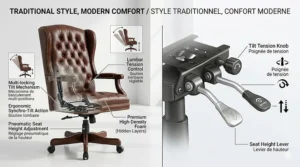
The Flash Furniture High-Back Traditional Tufted model hits the sweet spot between authentic traditional styling and practical ergonomics. With its brown LeatherSoft upholstery—a leather and polyurethane blend that holds up better than pure leather in Canadian winters when indoor heating creates dry conditions—this chair delivers the executive look without the executive price tag.
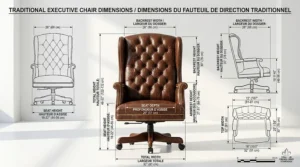
Key specifications translate to real-world performance in ways the product listing won’t tell you: the 26.5″ width accommodates most body types comfortably, while the 48.5-51.25″ adjustable height range means it works equally well with standard desks (around 73-76 cm height) and sit-stand configurations. The mahogany wood-capped metal base isn’t solid mahogany—it’s a metal frame with mahogany finishing—but it provides the visual warmth you want while supporting the chair’s 66 lb weight capacity more reliably than pure wood in humid summer months common across Ontario and Quebec.
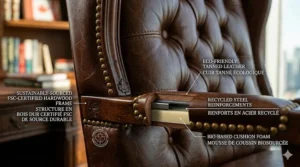
What makes this chair particularly suited to Canadian home offices is its tilt tension adjustment knob. During those long January work-from-home sessions when you’re grinding through tax documents or year-end reports, the ability to customize backward tilt resistance prevents that sensation of toppling when you lean back. The brass nail accents aren’t just decorative; they reinforce stress points where upholstery meets frame, extending lifespan compared to stapled alternatives.
Canadian customer feedback consistently praises assembly simplicity—most report 20-30 minute setup without professional help. However, several reviewers in Vancouver and Edmonton noted the chair runs slightly firm for the first month, requiring a break-in period before the foam padding conforms to your body.
Pros:
✅ Button-tufted authenticity meets modern ergonomics
✅ LeatherSoft resists cracking in low-humidity Canadian winters
✅ Reasonable pricing in the $350-$450 CAD range
Cons:
❌ Requires 3-4 week break-in period for optimal comfort
❌ Wood-capped base, not solid mahogany (despite appearance)
Price & Verdict: In the $350-$450 CAD range on Amazon.ca, this chair represents outstanding value for professionals who want timeless office elegance without premium pricing. It’s the chair I’d recommend for accountants, consultants, and remote workers who need 6-8 hours of daily seated comfort.
2. Boss Office Products Classic Executive Caressoft Chair
The Boss Office Products Classic model brings legitimacy to the traditional executive segment with its commitment to Canadian workplace safety standards. This chair holds BIFMA X5.1 certification—the American furniture safety standard that CSA Z412 references for structural integrity—meaning it’s tested to withstand the kind of abuse a busy office dishes out over 5-7 years of use.
With a 27″ wide base and 275 lb weight capacity, this chair serves the majority of Canadian office workers comfortably. The real differentiator here is the adjustable tilt tension control combined with an upright locking position. If you’re taking video calls (and who isn’t in 2026?), that upright lock prevents the awkward backward drift that ruins your professional camera presence. The pneumatic gas lift provides smooth height adjustment from 43-46.5″, accommodating users from about 165 cm to 185 cm in height without compromising ergonomic positioning.
Here’s what the product description glosses over: Boss’s “Caressoft” upholstery is actually a vinyl composite, not leather. For some buyers, that’s a dealbreaker. For others, it’s a benefit—vinyl requires virtually no maintenance, resists coffee spills better than genuine leather, and costs significantly less. In Canadian offices where winter boots track salt and moisture, that low-maintenance factor carries real value.
The mahogany finish on the 27″ base adds traditional warmth, though at 60 lbs total weight, this chair isn’t easy to relocate frequently. Canadian reviewers consistently mention the five hooded double-wheel casters roll smoothly on both carpet and the hardwood floors common in renovated heritage buildings across cities like Montreal and Ottawa.
Pros:
✅ BIFMA-certified safety and durability
✅ Vinyl upholstery resists Canadian winter salt damage
✅ Upright locking position perfect for video conferencing
Cons:
❌ Vinyl upholstery lacks genuine leather’s prestige
❌ 60 lb weight makes relocation challenging
Price & Verdict: Priced around $400-$550 CAD on Amazon.ca, the Boss Classic delivers reliable performance for small business owners and professionals who prioritize function over luxury materials. If you’re outfitting a consulting office or medical practice waiting room, this chair’s durability justifies the mid-range investment.
3. LIVING TRENDS Fully Tufted Brown LeatherSoft Executive Chair
The LIVING TRENDS Executive model distinguishes itself with comprehensive button tufting across both the back and seat—a level of detail many competitors reserve only for the backrest. This full-coverage tufting isn’t merely aesthetic; it creates micro-zones of support that distribute weight more evenly, reducing pressure points during extended sitting sessions.
Specifications worth noting: the 18.5″ x 19″ seat dimensions run slightly smaller than some competitors, which Canadian buyers with broader builds should consider. However, for users up to approximately 90 kg, the CA117 fire-retardant foam padding provides excellent support without bottoming out. The rolled arms with individual brass nail trim create a classic silhouette that photographs exceptionally well—relevant if you’re conducting virtual consultations or client presentations from your home office.
What most Amazon.ca listings don’t emphasize is the tilt lock mechanism’s utility in Canadian climates. During winter months when static electricity from dry indoor air makes certain materials cling to clothing, the ability to lock the chair in an upright position prevents involuntary sliding that disrupts workflow. The pneumatic seat height adjustment operates smoothly even in unheated garages or basement offices where temperature fluctuations might affect lesser mechanisms.
Canadian customer reviews from Saskatchewan and Manitoba particularly praise the mahogany wood-capped base’s stability on area rugs—a common flooring solution in prairie homes where hardwood can warp with seasonal humidity changes. The dual-wheel casters won’t damage those rugs, unlike single-wheel designs that concentrate pressure.
Pros:
✅ Full seat and back tufting provides superior weight distribution
✅ Rolled arms with brass accents deliver authentic traditional styling
✅ Stable on area rugs and carpeting common in Canadian homes
Cons:
❌ Narrower seat (18.5″) may not suit broader body types
❌ Assembly requires careful attention to maintain tufting alignment
Price & Verdict: In the $380-$480 CAD range, LIVING TRENDS offers a compelling choice for home-based professionals and small office environments where classic boardroom seating matters. The fully tufted design makes this my top pick for lawyers, financial advisors, and consultants who meet clients in their offices.
4. Amazon Basics Executive Home Office Desk Chair
The Amazon Basics Executive model serves as the entry point into traditional executive seating, and understanding its limitations is crucial before purchase. With bonded leather (faux leather) upholstery and a price point typically in the $250-$350 CAD range, this chair makes aesthetic compromises that budget-conscious Canadian buyers should evaluate honestly.
The 25.75″ depth and 24.25″ width create a compact footprint ideal for smaller home offices or basement workspaces common in urban Canadian housing. FSC-certified plywood construction means the materials meet sustainable forestry standards—a consideration for environmentally conscious buyers. The brown and gold colour scheme delivers traditional visual warmth, and from across a room, it reads as executive furniture.
However, here’s the reality most reviews dance around: bonded leather degrades faster than LeatherSoft or genuine leather, particularly in Canadian environments where you’re cycling between humid summers and bone-dry heated winters. Expect visible peeling after 18-24 months of daily use, especially on high-contact areas like armrests and seat edges. The 275 lb capacity is adequate for most users, but the support system beneath that capacity lacks the reinforced framing found in chairs costing $100-$200 more.
The pneumatic gas lift and tilt mechanism function adequately for occasional use—think 2-4 hours daily—but extended sitting reveals this chair’s budget-tier cushioning. The foam compresses noticeably after six months, and lower back support diminishes accordingly. For Canadian students furnishing dorm rooms or young professionals in their first apartments, these trade-offs might be acceptable. For anyone planning to work from home 40+ hours weekly, they’re not.
Pros:
✅ Entry-level pricing makes executive styling accessible
✅ FSC-certified sustainable materials
✅ Compact footprint suits smaller Canadian urban spaces
Cons:
❌ Bonded leather deteriorates within 2 years
❌ Minimal lower back support for extended sitting
Price & Verdict: At $250-$350 CAD, this chair fills a specific niche: temporary office furnishing or secondary seating for spare rooms. Don’t expect multi-year durability, but for short-term needs or budget constraints, it provides a traditional aesthetic at accessible pricing.
5. Scranton & Co Traditional Oxblood Red Executive Chair
The Scranton & Co Oxblood model makes an unapologetic statement with its deep red finish—a colour choice that either elevates your office’s gravitas or clashes spectacularly, depending on surrounding décor. This wingback design channels classic Chesterfield seating, making it particularly well-suited to law offices, financial planning firms, and executive suites where traditional authority matters.
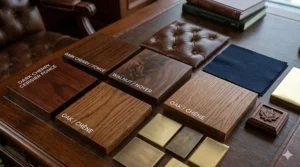
At 30″ width and 32″ depth, this chair accommodates larger frames more comfortably than many competitors. The 41-44″ adjustable height range works well with both standard and executive-height desks (the latter typically running 76-81 cm high). Mahogany wood accents throughout the frame create cohesive traditional styling, though at this price point—$500-$650 CAD on Amazon.ca—you’re paying a premium for that authentic aesthetic.
What differentiates this chair in Canadian contexts is its suitability for client-facing environments. If you’re running consultations, mediations, or advisory sessions where your office furniture contributes to professional credibility, the wingback silhouette and oxblood upholstery communicate established authority. It’s the chair judges, senior partners, and C-suite executives choose when they want visitors to recognize experience the moment they enter the room.
The tufted design extends across the entire back and wraps around the wings, creating multiple support zones that reduce pressure on the shoulder blades during long contract reviews or strategy sessions. Canadian reviewers in British Columbia and Alberta particularly appreciate how the deeper seat (32″ vs. the typical 28-30″) accommodates winter layers—suit jackets, cardigans—without the cramped sensation some executive chairs create.
Pros:
✅ Wingback design delivers unmistakable executive presence
✅ 30″ width accommodates broader body types comfortably
✅ Oxblood finish creates distinctive, memorable aesthetic
Cons:
❌ Higher price point ($500-$650 CAD) limits accessibility
❌ Bold colour may not suit all office colour schemes
Price & Verdict: This chair justifies its $500-$650 CAD price tag for professionals where office aesthetics directly influence client perception. Estate lawyers, wealth management advisors, and senior executives should consider this investment, while those in tech or creative fields might find the formal styling excessive.
6. Boss Office Products Heavy Duty 400lb Executive Chair
The Boss Heavy Duty model addresses a gap in the traditional executive chair market: robust construction for larger users without sacrificing classic aesthetics. With a 400 lb weight capacity and reinforced steel frame, this chair serves Canadian professionals who’ve been underserved by the industry’s typical 250-275 lb standard.
The steel wrap-around arm construction provides both structural integrity and ergonomic armrest support that won’t flex or wobble under pressure. This matters more than spec sheets suggest—when you’re shifting weight to reach desk items or standing up after extended sitting, arm stability prevents the awkward lurch that cheaper chairs create. The reinforced lumbar support is positioned higher than standard models, accommodating taller torsos (typically 180 cm+ in height) that find conventional lumbar cushions landing mid-back.
LeatherPlus upholstery—Boss’s proprietary leather-polyurethane blend—resists the spills and moisture exposure that damage pure leather. In Canadian offices where coffee is practically mandatory and winter gear drips melted snow, that resilience extends the chair’s lifespan considerably. The heavy-duty spring tilt mechanism tolerates repeated use better than pneumatic systems common in lighter chairs, meaning this model will still tilt smoothly in year five when competitors’ mechanisms have grown stiff or unpredictable.
Canadian reviewers weighing 225-300 lbs consistently praise the chair’s confidence-inspiring stability—no creaking, no concerning flex, no sense that components are straining. At 31″ W x 32″ D, it occupies more floor space than standard executive chairs, which smaller home offices (common in Toronto or Vancouver condos) should factor into placement decisions.
Pros:
✅ 400 lb capacity with genuinely reinforced construction
✅ Steel-wrapped arms provide rock-solid stability
✅ Heavy-duty mechanisms maintain performance over years
Cons:
❌ Larger footprint (31″ x 32″) requires spacious office
❌ Premium pricing ($550-$700 CAD) reflects specialized construction
Price & Verdict: At $550-$700 CAD, this chair costs noticeably more than standard models, but for users requiring enhanced weight capacity or exceptional durability, it’s not optional—it’s essential. Big and tall Canadians, or anyone frustrated by chairs that feel flimsy, should prioritize this investment.
7. Flash Furniture Oversized Headrest Traditional Executive Chair
The Flash Furniture Oversized Headrest model differentiates itself with a pillow-back cushion and rolled headrest that extend support significantly higher than standard high-back designs. For Canadian professionals spending 8+ hours daily in video conferences, document review, or focused computer work, that additional head and neck support prevents the forward head posture that causes cervical strain.
At 27″ W x 32″ D with a 47.75-51″ adjustable height, this chair suits taller users (175-195 cm) who’ve struggled to find traditional executive seating that properly supports their full spine. The button-tufted back and brass nail accents maintain classic aesthetics while the oversized headrest adds functionality that pure design-focused models omit. The brown LeatherSoft upholstery matches other Flash Furniture models, offering the same durability benefits in low-humidity Canadian winter conditions.
What the product specifications don’t adequately communicate is how the rolled headrest changes your relationship with the chair. Instead of periodically tilting back to relieve neck tension—interrupting workflow—you can maintain an upright working position while the headrest cradles cervical vertebrae. For accountants during tax season, lawyers during trial preparation, or any professional facing deadline crunches, that sustained comfort matters enormously.
The mahogany base (wood-capped metal, like other Flash models) provides the traditional aesthetic foundation, while the ANSI/BIFMA X5.1-17 compliance ensures the chair meets North American furniture safety standards. Canadian buyers should note this model’s 23″ wide back accommodates shoulder widths up to approximately 48-50 cm comfortably—broader builds may find the wings slightly confining during extended sessions.
Pros:
✅ Oversized headrest prevents cervical strain during long sessions
✅ Taller height range (47.75-51″) suits users above 175 cm
✅ BIFMA compliance demonstrates structural reliability
Cons:
❌ 23″ back width may feel narrow for broader shoulders
❌ Headrest positioning takes adjustment to optimize
Price & Verdict: Priced in the $420-$550 CAD range on Amazon.ca, this chair serves a specific Canadian buyer: professionals working extended hours who’ve experienced neck pain with standard executive seating. If you’re logging 8+ hour days consistently, the headrest feature alone justifies the investment over cheaper alternatives.
How to Choose Traditional Executive Chairs for Your Canadian Office
✨ Don’t Miss These Exclusive Deals!
🔍 Take your office presence to the next level with these carefully selected traditional executive chairs. Click on any highlighted item to check current pricing and availability on Amazon.ca. These chairs will help you create an authentic executive environment your clients will remember!
Selecting the right traditional executive chair for Canadian conditions requires evaluating factors beyond aesthetics. Start with upholstery durability in variable climates—LeatherSoft and vinyl blends resist the cracking that pure leather experiences when you’re cycling between humid 30°C summers and dry, heated -20°C winters. Genuine leather looks prestigious initially but demands maintenance (conditioning every 3-4 months) that busy professionals often neglect, leading to premature aging.
Weight capacity deserves more attention than most buyers give it. Even if you weigh well under the listed capacity, chairs rated for 400 lbs use reinforced frames and components that outlast 250 lb models by years. It’s not about whether the chair supports you—it’s about whether mechanisms, pneumatic lifts, and upholstery attachment points withstand repeated stress cycles without loosening or failing. In Canadian offices where furniture replacement isn’t budgeted annually, that long-term reliability matters.
Consider your desk height and typical tasks when evaluating seat dimensions. Standard Canadian desks run 73-76 cm high, requiring chairs that adjust low enough (around 45-50 cm seat height) to maintain proper elbow positioning at keyboard level. If you’re using a sit-stand desk or executive-height work surface (76-81 cm), verify the chair’s maximum height accommodates those configurations. A chair that looks perfect might force you into shoulder-shrugging posture if height ranges don’t align.
Assess your floor surface realistically. Dual-wheel casters distribute weight better than single-wheel designs on area rugs common in Canadian home offices, while hard caster wheels suit low-pile commercial carpeting better than soft rubber variants. If you’re working on hardwood floors in a heritage building—common across Montreal, Ottawa, and older Toronto neighbourhoods—verify casters won’t scratch or dent the finish. Some chairs include floor protectors; others require separate purchase of caster wheels designed for hard surfaces.
Climate-specific considerations matter more than American product reviews suggest. Canadian winters create static electricity in heated offices that makes certain upholstery materials cling uncomfortably to clothing. Vinyl and LeatherSoft blends minimize this issue compared to pure leather. Similarly, the salt and moisture tracked into Canadian offices from November through March demands upholstery that tolerates cleaning—bonded leather fails this test, deteriorating rapidly when wiped with damp cloths.
Evaluate assembly requirements honestly. Most traditional executive chairs require 20-40 minutes of setup, often alone since shipping doesn’t include white-glove delivery outside major urban centres. If you’re in rural Saskatchewan or northern British Columbia, factor delivery timelines (potentially 2-3 weeks) into your purchase decision. Some buyers in remote areas find paying the extra $100-$150 CAD for professional assembly worthwhile, though Amazon.ca doesn’t always offer this service outside Toronto, Vancouver, and Montreal markets.
Finally, match the chair’s aesthetic weight to your professional context. Law offices, financial advisory firms, and C-suite executive spaces benefit from the gravitas traditional executive chairs provide. Tech start-ups, creative agencies, and modern co-working spaces may find the formal styling dated rather than distinguished. Be honest about whether classic boardroom elegance serves your brand identity or contradicts it.
Common Mistakes When Buying Traditional Executive Chairs in Canada
Canadian buyers repeatedly make predictable errors that cost them comfort and money. The most expensive mistake is prioritizing appearance over ergonomic fundamentals. A chair can feature gorgeous tufting, mahogany accents, and brass nail trim while providing inadequate lumbar support that leaves you aching after four hours. Traditional styling and ergonomic function aren’t mutually exclusive—chairs like the Flash Furniture models prove that—but they don’t automatically coexist either. Test or thoroughly research whether the specific model you’re considering actually supports neutral spine positioning, not just whether it looks impressive.
Underestimating the importance of adjustability features ranks second among common errors. Tilt tension control, height adjustment range, and armrest positioning significantly impact daily comfort, yet many buyers fixate on visual details like leather quality or wood finish. If you can’t customize the chair’s mechanics to your body dimensions and work tasks, those aesthetic features become irrelevant during your eighth hour of sitting. Prioritize chairs offering pneumatic height adjustment (smoother than lever systems), tilt tension customization (prevents toppling or resistance that’s too stiff), and arm height that aligns with your desk surface.
Many Canadians fail to account for actual hours of daily use when budgeting. A $300 CAD chair seems economical until it’s causing back pain after 18 months of 8-hour workdays, requiring replacement plus potential physiotherapy costs. That $600 CAD chair with reinforced construction and superior cushioning becomes the economical choice when it’s still comfortable and structurally sound in year five. Calculate cost-per-hour-of-use rather than just sticker price—perspective shifts dramatically.
Ignoring Canadian-specific warranty and return considerations creates expensive headaches. Amazon.ca’s return window for furniture is typically 30 days, but some third-party sellers (not Amazon directly) impose restocking fees of 15-25% on opened items, and you’re responsible for return shipping on a 60-70 lb chair. That can cost $50-$100+ CAD from rural areas. Read return policies carefully, and if possible, select items fulfilled by Amazon.ca directly rather than marketplace sellers where policies vary wildly.
Overlooking dimension verification for your specific space seems obvious but happens constantly. Traditional executive chairs with wingback designs or wide bases physically don’t fit under certain desk configurations or through narrow doorways common in older Canadian buildings. Measure your office entry points, desk clearance, and floor space available before ordering. Returns due to size miscalculation are expensive and frustrating.
Finally, assuming all “mahogany” is equal leads to disappointment. Many traditional executive chairs feature “mahogany finish” or “mahogany-capped” bases—meaning mahogany-coloured treatment over metal or engineered wood, not solid mahogany construction. If authentic solid wood matters to you, verify specifications explicitly state “solid mahogany” rather than descriptive ambiguity. There’s nothing wrong with wood-capped alternatives (they’re often more durable), but you shouldn’t pay solid-wood prices for veneer or finish work.
Executive Presence for Canadian Small Business Owners
Small business owners across Canada face unique furniture decisions because their offices serve dual purposes: personal workspace and client-meeting environment. Traditional executive chairs in this context aren’t indulgences—they’re professional tools that influence client perception and, consequently, revenue generation.
Consider the psychological impact of furniture choices on Canadian business culture. Unlike American markets where casual Silicon Valley aesthetics have penetrated broadly, many Canadian professional services—particularly in established industries like law, accounting, financial services, and real estate—still value traditional signals of competence and permanence. According to Canada’s workplace ergonomics guidelines, proper office furniture selection contributes significantly to employee health and productivity in federally regulated workplaces. When clients enter your office for wealth management advice or estate planning consultations, classic leather executive seating communicates stability and experience that mesh task chairs simply cannot.
For home-based businesses common across Canadian suburbs and rural areas, traditional executive chairs solve the work-life boundary challenge. When your office occupies a converted bedroom or basement space, furniture that looks distinctly professional helps create psychological separation between work mode and home life. It’s easier to shift into focused work mindset when you’re sitting in furniture that wouldn’t belong in your living room. This matters more for Canadians who’ve maintained hybrid or fully remote work arrangements post-pandemic, where environmental cues support productivity.
Tax considerations for Canadian small business owners add another dimension. Office furniture typically qualifies as a capital asset eligible for depreciation deductions through the Capital Cost Allowance (CCA). Chairs priced above $500 CAD may offer better tax advantages amortized over several years compared to budget purchases replaced frequently. Consult your accountant about whether investing in durable, higher-priced traditional executive seating provides tax optimization opportunities beyond just comfort improvements.
The durability-to-cost ratio matters intensely for Canadian small businesses operating on tight budgets. A $300 chair requiring replacement every 18-24 months costs more over five years than a $600 chair lasting the entire period. Factor repair costs too—higher-quality traditional executive chairs often allow component replacement (caster wheels, armrests, gas lift cylinders) extending lifespan economically, while budget models typically require complete replacement when any component fails.
Finally, consider expansion scenarios. If you’re planning to grow from solo operation to hiring employees within 2-3 years, purchasing traditional executive chairs now establishes consistent office aesthetics and avoids the visual hodgepodge that develops when furniture gets added piecemeal. Matching your administrative staff’s seating to your own executive chair creates cohesive professionalism that clients notice subconsciously.
Traditional Executive Chairs vs. Modern Ergonomic Alternatives
The tension between traditional executive aesthetics and modern ergonomic design creates legitimate decision paralysis for Canadian office furniture buyers. Understanding the actual trade-offs—not manufacturer marketing—helps clarify which approach suits your circumstances.
Traditional executive chairs prioritize visual authority and timeless design over cutting-edge ergonomic innovation. They feature fixed backrests, limited adjustment mechanisms, and aesthetic elements (tufting, brass accents, wooden bases) that add weight and reduce flexibility. Modern ergonomic chairs counter with mesh backs promoting airflow, lumbar support that adjusts in multiple dimensions, and lightweight materials enabling easier repositioning. For Canadian buyers working 8+ hour days in climate-controlled offices, ergonomic advantages potentially outweigh aesthetic considerations—lower back pain costs productivity regardless of how impressive your chair looks.
However, context determines which factors dominate. If you’re meeting clients regularly, mediating disputes, or conducting consultations where your office communicates professional credibility, traditional executive seating provides non-verbal messaging that mesh ergonomic chairs cannot. A bankruptcy lawyer counselling distressed clients benefits from furniture suggesting stability and experience. A graphic designer brainstorming with tech start-ups might find traditional styling counterproductive, signalling rigidity rather than creativity.
Cost structures differ significantly between categories. Entry-level traditional executive chairs on Amazon.ca start around $250-$300 CAD but skimp on ergonomic features. Quality traditional seating offering genuine ergonomic support runs $400-$700 CAD. Modern ergonomic chairs deliver superior support in the $300-$500 CAD range, though premium models (Herman Miller, Steelcase) exceed $1,000 CAD. For budget-conscious Canadian buyers, modern ergonomic chairs often provide better cost-to-comfort ratios, while those prioritizing aesthetics may need to spend more to get traditional styling with adequate ergonomics.
Maintenance and longevity favour different winners in Canadian climates. Traditional leather or LeatherSoft upholstery requires periodic conditioning (every 3-4 months in dry heated winters) but can last 5-7 years with care. Mesh backs on ergonomic chairs require virtually no maintenance but may stretch or tear after 4-5 years of daily use. In Canadian contexts where furniture replacement isn’t annual, traditional executive chairs’ repairable construction (replaceable casters, arm pads, upholstery) offers advantages over modern designs where mesh panel replacement often costs nearly as much as buying new chairs.
The hybrid solution many Canadian professionals overlook involves using different chair types strategically. A traditional executive chair for your primary desk—where clients see you and extended work happens—paired with a modern ergonomic task chair for a secondary work surface (standing desk, collaborative table) provides aesthetic credibility when needed while protecting long-term spinal health. This approach costs more initially ($500-$800 CAD total vs. $400-$600 for a single chair) but serves diverse work modes more effectively.
Ultimately, your body’s feedback trumps all theoretical analysis. If you’re experiencing lower back pain, neck strain, or shoulder tension with traditional executive seating, no amount of aesthetic appeal justifies the discomfort. Conversely, if you’re comfortable during extended sessions and your professional context benefits from traditional styling, ergonomic chair advocates’ arguments become irrelevant. Trust actual experience over anticipated benefits.
What to Expect: Real-World Performance in Canadian Office Conditions
Understanding how traditional executive chairs perform in actual Canadian office environments—not manufacturer testing labs—prevents expensive disappointments. Start with assembly reality checks: most chairs arrive in boxes weighing 60-75 lbs requiring 25-40 minutes to assemble. If you’re in a second-floor Toronto walk-up or a Winnipeg home with narrow staircases, factor logistics into your purchase decision. Some buyers pay neighbours or handymen $40-$60 CAD to handle assembly and packaging disposal rather than wrestling with it alone.
Initial comfort differs dramatically from long-term comfort. Many traditional executive chairs feel slightly firm during first use—the foam padding and upholstery haven’t conformed to your body yet. Expect a 2-4 week break-in period where the chair gradually becomes more comfortable as materials compress and mould to your seated shape. Conversely, chairs feeling perfectly cushioned on day one may bottom out after six months as lower-quality foam loses resilience. Canadian reviewers purchasing Boss and Flash Furniture models typically report 3-6 week break-in periods before achieving optimal comfort, while Amazon Basics chairs often feel best initially but deteriorate noticeably by month eight.
Seasonal performance variations surprise many Canadian buyers. During winter months when indoor humidity drops below 30% (common across prairies and interior regions), leather and LeatherSoft upholstery can feel cool to touch initially, taking 5-10 minutes to warm to body temperature. Static electricity also increases in low humidity, making certain upholstery materials cling to clothing—LeatherSoft handles this better than pure leather or bonded leather varieties. Summer humidity above 60% (frequent in coastal BC and Maritime provinces) can make leather feel slightly sticky during extended sitting, though this affects genuine leather more than LeatherSoft blends.
Noise development over time rarely appears in product descriptions but affects user experience significantly. Quality traditional executive chairs maintain silent operation for years—the tilt mechanisms, gas lift cylinders, and swivel components operate smoothly without squeaking. Budget models often develop creaks and groans after 6-12 months of daily use as components loosen and metal-on-metal contact points lack adequate lubrication. Canadian buyers should budget $8-$12 CAD for WD-40 Specialist Silicone lubricant to address minor squeaking before it becomes aggravating.
Caster performance on various flooring types matters more than buyers anticipate. Hard plastic casters (common on budget chairs) scratch hardwood floors and catch on area rug edges. Soft rubber casters protect floors but accumulate debris (hair, dust, threads) requiring periodic cleaning to maintain smooth rolling. If you’re working on the commercial-grade low-pile carpeting common in Canadian office buildings, standard dual-wheel casters perform adequately. For hardwood floors in home offices, consider upgrading to rollerblade-style caster wheels ($20-$30 CAD for a set of five on Amazon.ca) that glide smoothly without damage.
Actual weight capacities deserve scepticism beyond manufacturer claims. A chair rated for 275 lbs doesn’t fail catastrophically at 276 lbs, but components experience accelerated wear when regularly supporting weight near maximum capacity. If you weigh 230-250 lbs, chairs rated for 275 lbs will have shorter lifespans than 400 lb models used at well below their threshold. This isn’t about safety—it’s about longevity. For Canadian buyers where chair replacement isn’t annual, selecting models with weight capacity substantially above your requirements extends usable life considerably.
Finally, customer service and warranty realities for Canadian purchases through Amazon.ca vary widely. Chairs sold and shipped by Amazon.ca directly typically honour straightforward returns within 30 days and replacement for defective components. Third-party marketplace sellers may impose restocking fees, require original packaging for returns, or complicate warranty claims. Always verify the seller before purchasing—”Sold by Office Furniture Depot and Fulfilled by Amazon” still means you’re dealing with the third-party seller for issues beyond Amazon’s standard return window.
Long-Term Cost & Maintenance: The Real Price of Traditional Elegance
Canadian buyers fixating solely on purchase price overlook the total cost of ownership that determines whether traditional executive chairs represent value or regret. Maintenance requirements directly impact long-term costs and vary dramatically between upholstery types. Genuine leather demands conditioning every 3-4 months using products like Leather Honey ($18-$25 CAD on Amazon.ca) to prevent cracking in dry Canadian winters. Skipping this maintenance accelerates deterioration—budget $60-$80 CAD annually for leather care, plus 15 minutes of effort quarterly. LeatherSoft and vinyl alternatives require only occasional wiping with damp cloths (no conditioning needed), saving both money and time over 5-7 year ownership periods.
Component replacement costs separate durable investments from false economies. Quality traditional executive chairs allow replacement of worn caster wheels ($20-$30 CAD), gas lift cylinders ($40-$60 CAD), or armrest padding ($15-$25 CAD per arm) when these components inevitably wear out. Budget chairs often use proprietary parts unavailable for separate purchase, forcing complete chair replacement when any single component fails. For Canadian users keeping furniture 5+ years, this repairability advantage translates to hundreds of dollars in avoided replacement costs.
Energy costs related to office heating may seem tangential to chair selection but matter in Canadian contexts. Traditional executive chairs with thick padding and substantial upholstery retain body heat better than mesh alternatives, reducing the need to crank thermostats during extended work sessions. In Canadian homes where heating costs run $150-$300 monthly during winter (higher in rural areas dependent on propane or oil), even minor thermal efficiency gains compound over heating seasons. This benefit is modest—perhaps $8-$15 CAD monthly savings—but non-zero for budget-conscious remote workers.
The replacement cycle itself deserves cost analysis. A $300 CAD chair lasting 2 years costs $150 annually. A $600 CAD chair lasting 6 years costs $100 annually—33% less despite the higher upfront expense. Factor in the hassle costs of shopping, ordering, assembly, and disposing of old chairs, and the premium model’s value advantage grows further. Many Canadian small business owners fail to amortize furniture costs this way, perceiving the $300 savings at purchase as meaningful when it actually represents long-term waste.
Tax treatment of office furniture purchases for Canadian small businesses and self-employed professionals adds complexity to cost calculations. Under Capital Cost Allowance rules, office furniture typically depreciates at 20% annually using declining balance method. A $600 chair purchased in 2026 generates $120 tax deduction in year one (assuming 20% CCA rate and full-year ownership), $96 in year two, $77 in year three, and so on. For professionals in 30% marginal tax brackets, that’s $36, $29, and $23 in annual tax savings respectively. Over five years, the government effectively subsidizes approximately $145-$160 CAD of the chair’s cost through reduced taxes. This makes the true cost differential between budget and premium chairs smaller than sticker prices suggest.
Disposal costs for traditional executive chairs at end-of-life vary across Canadian municipalities. Some cities include furniture pickup in regular waste collection; others charge $25-$50 CAD for special item removal. If you’re replacing chairs every 2-3 years rather than 5-7, those disposal fees compound. Additionally, environmental consciousness increasingly drives purchase decisions for younger Canadian professionals—chairs lasting longer generate less waste and consume fewer resources through reduced manufacturing demand.
The depreciation in resale value differs between quality tiers. Premium traditional executive chairs retaining good condition can sell for 30-40% of original price on Kijiji, Facebook Marketplace, or OfferUp after 3-4 years of use. Budget models have virtually no resale market—they’re worth only scrap value. For Canadians upgrading office furniture or relocating, this residual value partially offsets premium purchases’ higher initial costs.

Frequently Asked Questions
❓ Can traditional executive chairs provide adequate ergonomic support for 8+ hour workdays in Canadian offices?
❓ Do traditional executive chairs with mahogany bases hold up in Canadian winter conditions?
❓ Are traditional executive chairs worth the price premium over modern mesh ergonomic chairs for Canadian small businesses?
❓ How long should traditional executive chairs last with daily 40+ hour weekly use in Canada?
❓ Do traditional executive chairs ship fully assembled to remote areas of Canada?
Conclusion
Traditional executive chairs occupy a specific niche in Canadian office furniture markets—they’re not universally superior to modern alternatives, but they serve particular professional contexts exceptionally well. For lawyers, financial advisors, executives, and small business owners where office aesthetics influence client perception and revenue generation, investing $400-$700 CAD in quality traditional seating makes clear business sense. The combination of timeless design, professional gravitas, and increasingly sophisticated ergonomic features in models from Boss, Flash Furniture, and Scranton & Co delivers value that mesh task chairs cannot replicate.
The critical insight most Canadian buyers miss is that price and quality don’t correlate linearly across the entire market. Budget models under $350 CAD make too many compromises—bonded leather that deteriorates within two years, inadequate cushioning that compresses quickly, mechanisms that loosen and squeak—to justify even their modest cost for daily professional use. Meanwhile, the jump from mid-range ($400-$550 CAD) to premium ($550-$700 CAD) primarily buys specialized features like enhanced weight capacity or wingback styling rather than proportional comfort improvements for average users.
For most Canadian professionals furnishing home offices or small business environments, the Flash Furniture Tufted High-Back ($350-$450 CAD) and Boss Classic Mahogany ($400-$550 CAD) represent the reliability sweet spot—authentic traditional aesthetics, genuine ergonomic support, and durability extending 5-7 years with proper maintenance. Buyers requiring higher weight capacity should prioritize the Boss Heavy Duty model despite its premium price, while those valuing distinctive executive presence may find the Scranton & Co Oxblood’s unique styling worth the investment.
Ultimately, traditional executive chairs reward buyers who understand they’re purchasing long-term workplace tools rather than disposable furniture. Canadian climate variations, extensive daily use, and professional reputation considerations all factor into selection decisions that purely aesthetic or price-driven approaches miss. Take time to evaluate your specific requirements—industry context, body dimensions, budget constraints, office space—rather than defaulting to whatever model photographs most impressively. Your back, your clients, and your budget will thank you five years from now.
✨ Don’t Miss These Exclusive Deals!
🔍 Elevate your professional presence with these carefully selected traditional executive chairs. Click on any highlighted item to check current pricing and availability on Amazon.ca. These timeless pieces will transform your workspace into the executive environment you deserve!
Recommended for You
- 7 Best Scandinavian Office Chairs Canada – Hygge Workspace 2026
- 7 Best Minimalist Office Chairs Canada Small Spaces 2026
- Best Modern Office Chairs Canada 2026: 7 Expert Picks
Disclaimer: This article contains affiliate links. As an Amazon Associate, I earn from qualifying purchases. If you purchase products through these links, we may earn a small commission at no additional cost to you.
✨ Found this helpful? Share it with your friends! 💬🤗
