
In This Article
Your keyboard doesn’t care if your hips are tilted. Your mouse doesn’t notice your shoulders creeping toward your ears in hour four of a scrim block. But you will — usually around the third or fourth round, right when your reaction time actually matters. An esports gaming chair is a competition-oriented seat engineered around sustained, high-focus sitting: reinforced lumbar support, a wide recline range, and a frame built to survive being sat in for six-plus hours a day without turning into a $200 mistake…
That’s the whole pitch, and it’s a fair one, but “gaming chair” has become a marketing word slapped on everything from genuinely engineered furniture to a vinyl-wrapped lawn chair with a headrest pillow. The difference matters more than most buyers realize, and it matters even more if you’re gaming competitively — ranked ladders, LAN qualifiers, or full tournament seats where you might be locked into position for hours with a crowd watching. This guide breaks down seven real, currently available esports gaming chair options sold in Canada, with honest analysis pulled from real specs and aggregated review data, not invented hands-on claims. According to the Canadian Centre for Occupational Health and Safety, poor seated posture sustained over long stretches is a documented contributor to musculoskeletal strain — which is precisely the problem a well-built esports chair is designed to solve.
We’ll cover budget picks under C$300, mid-range workhorses in the C$300-C$700 band, and the investment-grade chairs that pro orgs actually buy in bulk. Every recommendation below is a real product you can currently find through Amazon.ca or the brand’s own storefront, evaluated on specs, aggregated review sentiment, and where it actually earns its price tag.
Quick Comparison Table
| Chair | Best For | Recline | Price Range (CAD) |
|---|---|---|---|
| Secretlab TITAN Evo | All-around competitive use | Up to 165° | C$650-C$950 |
| AndaSeat Kaiser 4 | Adjustable lumbar precision | Up to 135° | C$750-C$900 |
| Razer Iskur V2 | Built-in curved lumbar | Up to 152° | C$850-C$950 |
| Herman Miller x Logitech G Embody | Marathon sessions, no compromise | Task-tilt | C$1,995-C$2,255 |
| ThunderX3 Solo 360 | Best value mid-range | Synchro-tilt | C$320-C$400 |
| Corsair TC100 RELAXED | Budget from a major brand | Up to 160° | C$260-C$330 |
| GTPLAYER Gaming Chair | Entry-level with footrest | Up to 155° | C$180-C$260 |
Looking at the spread above, the gap between “budget” and “premium” in this category isn’t really about whether the chair reclines or has armrests — nearly all of them do now. It’s about how precisely the lumbar and seat depth adjust to your specific spine, and how long the padding holds its shape before it starts feeling like a park bench. The Herman Miller x Logitech G Embody sits in its own category entirely, more office ergonomics tool than “gaming chair” in the traditional bucket-seat sense, while the GTPLAYER Gaming Chair proves you don’t need to spend C$700 to get a competent seat for casual-to-mid-length sessions.
💬 Just one click — help other Canadian golfers make a smarter bag choice too!😊
Top 7 Esports Gaming Chairs: Expert Analysis
1. Secretlab TITAN Evo — the benchmark every rival gets measured against
The standout here isn’t any single spec — it’s that Secretlab basically wrote the modern template for what a serious gaming chair should be, and everyone else on this list is reacting to it in some way. Under the hood, you get a steel internal frame, a Class 4 hydraulic piston rated for real longevity (not the wobbly gas lifts found on bargain chairs), and cold-cure foam padding rated to support up to 130 kg in the Regular size. The 4-way lumbar system lets you dial in both depth and height independently, which matters more than it sounds — most competitors only adjust one axis. Based on the spec comparison against its closest rivals, the TITAN Evo’s magnetic memory-foam headrest is a small but genuinely clever touch: no straps to slip mid-match. Reviewers consistently report that the chair takes a short “break-in” period before the foam feels right, and one recurring theme across owner feedback is that the XL size is worth the upcharge for anyone over 6 feet. Pros:
- ✅ Independently adjustable 4-way lumbar system
- ✅ Three sizes cover a genuinely wide range of body types
- ✅ Five-year warranty backs up the premium price
Cons:
- ❌ Noticeable break-in period before padding softens
- ❌ Fabric and leather variants both sit at the pricier end
Expect to pay in the C$650-C$950 range depending on upholstery, with fabric versions sitting near the bottom and NAPA leather pushing toward the top; for most competitive players, the mid-tier Softweave option is the smarter value play here.
2. AndaSeat Kaiser 4 — best for players who obsess over lumbar fit
What most buyers overlook about the Kaiser 4 is that its whole identity is built around one feature: a pop-out lumbar system that physically flips forward to meet your lower back at whatever depth you’re sitting. It’s a genuinely different mechanism than the dial-based systems used by competitors, and it’s paired with 5D armrests that adjust in five directions — up, down, forward, back, and pivoting inward, which matters for players who rest their forearms differently depending on whether they’re on mouse or controller. The steel-and-aluminum frame supports up to 395 lbs (roughly 179 kg), giving it one of the more generous weight ratings in this list. On paper, this makes it a strong pick for larger frames that other “one-size” gaming chairs simply don’t accommodate comfortably. Aggregated reviewer sentiment is largely positive on comfort and lumbar precision, though a recurring complaint across multiple outlets is that the armrests, for all their adjustability, feel fussier to lock into a stable position than simpler 4D designs. Pros:
- ✅ Pop-out lumbar system adapts to seat depth
- ✅ High 395 lb weight capacity for bigger frames
- ✅ Softer top-layer padding than most rivals
Cons:
- ❌ 5D armrests are finicky to lock in place
- ❌ Heavier and bulkier to move than the Titan Evo
Pricing typically lands in the C$750-C$900 range, and it’s currently sold primarily through AndaSeat’s own storefront rather than Amazon.ca directly, so check current availability before assuming same-day shipping.
3. Razer Iskur V2 — the lumbar curve specialists actually notice
The Iskur V2’s standout feature is baked into the frame itself rather than bolted on afterward: a curved backrest with 6D lumbar adjustment that’s shaped to track your spine’s natural S-curve instead of forcing a flat pillow against it. That’s a meaningfully different engineering approach from the pillow-and-dial systems used by most of this list. Built from EPU synthetic leather over a steel frame with a five-star aluminum base, the chair supports up to 136 kg and reclines to 152 degrees — slightly less than the TITAN Evo’s 165, which matters if you like to fully recline between rounds. Here’s what to weigh: reviewers across multiple outlets single out prolonged-session comfort as the Iskur V2’s strongest suit, with several noting it edges out the Titan Evo specifically on hour-four-and-beyond comfort, even if the initial recline range is narrower. A common complaint in user reviews is that the seat cushion runs shorter front-to-back than expected, which can shortchange thigh support for taller players. Pros:
- ✅ 6D lumbar curve tracks spine shape precisely
- ✅ Premium EPU leather wipes clean after spills
- ✅ Sturdy 5-star aluminum and steel base
Cons:
- ❌ Shorter seat cushion limits thigh support for tall users
- ❌ Recline tops out at 152°, less than some rivals
Expect a price around the C$850-C$950 range, positioning it as a direct, if pricier, alternative to the Titan Evo for anyone whose priority is lumbar precision over sheer recline angle.
4. Herman Miller x Logitech G Embody — the sponsorship-grade outlier
This is the chair that shows up in pro-team facility tours and content-creator studio setups, and its standout feature is that it doesn’t look, or behave, like a gaming chair at all. There’s no headrest, no racing-bucket bolsters, and no branded pillow — instead you get Herman Miller’s decades-old Embody ergonomic architecture, developed with input from more than twenty physicians and biomechanics researchers, wrapped in a gaming-specific Sync fabric with copper-infused cooling foam. What most buyers overlook is that this is functionally the same chair Herman Miller sells for office use, just re-skinned — meaning the ergonomic engineering behind it has been tested and refined for over a decade rather than being a first-generation gaming product. It supports up to 136 kg, adjusts on both height and width axes for the armrests, and ships fully assembled — no allen-key marathon required. Reviewer consensus is split almost evenly on value: comfort and build quality earn near-universal praise, but multiple outlets flag the price as genuinely hard to justify against chairs at a third of the cost. Reviewers consistently note the 12-year warranty as the strongest counterargument to the sticker shock, effectively amortizing the cost across a decade of use. Pros:
- ✅ Decade-refined Herman Miller ergonomic architecture
- ✅ Arrives fully assembled, no tool-heavy setup
- ✅ Class-leading 12-year warranty
Cons:
- ❌ No integrated headrest or neck support
- ❌ Price is difficult to justify against cheaper premium rivals
This one sits well above the rest of the list at roughly C$1,995-C$2,255, and it’s genuinely a different purchase decision — you’re buying it because the warranty math works for you over a decade, not because you need another racing-style chair.
5. ThunderX3 Solo 360 — the value pick that punches above its price
The Solo 360’s standout feature is right there in the name: 360-degree rotating 3D armrests at a price point where most competitors ship fixed or barely-adjustable arms. Built on a steel frame with a synchronous tilt mechanism, it comes in modern, mesh, and racer upholstery styles, giving buyers actual choice instead of one leatherette option in three colours. Based on the spec comparison against similarly priced chairs, the armrest range alone puts it ahead of most sub-C$400 competitors, since forearm position is one of the biggest contributors to shoulder fatigue during long mouse-heavy sessions. What most buyers overlook is that this level of adjustability usually costs C$150-200 more from other brands. Reviewers across multiple outlets consistently call it one of the best budget gaming chairs currently on the market, with praise centred on build stability and an easy sub-30-minute assembly. A recurring theme in aggregated feedback is that the initial firmness of the seat base softens noticeably after the first week of regular use. Pros:
- ✅ Genuine 360° armrest rotation at a budget price
- ✅ Choice of mesh, fabric, or leatherette upholstery
- ✅ Fast, straightforward assembly process
Cons:
- ❌ Seat feels firm out of the box before breaking in
- ❌ Nylon casters can mark hardwood or polished floors
Pricing runs roughly C$320-C$400, making it one of the strongest value propositions on this entire list for anyone gaming competitively on a real budget.
6. Corsair TC100 RELAXED — proof that a major brand can do budget right
The standout advantage of the TC100 RELAXED is a wider seat and gentler side bolsters than the typical racing-bucket shape, aimed at players who found narrower chairs uncomfortable rather than supportive. Corsair — a brand better known for keyboards and power supplies — builds this on a steel frame with memory foam padding, available in leatherette or fabric, and a recline range up to 160 degrees. What the spec sheet won’t tell you, but reviewer consensus makes clear, is that Corsair achieved this price point without gutting comfort the way many bargain chairs do; multiple outlets independently name it a top budget pick specifically because it doesn’t feel like a compromise. On paper, the 2D-only armrests (up-down movement only, no pivot or slide) are the clearest place Corsair cut costs relative to pricier options on this list. A common complaint in user reviews is a slightly fiddly assembly process, with a few reviewers noting some hardware feels cheaper than the seat itself. Pros:
- ✅ Wider seat and softer bolsters fit more body types
- ✅ Genuine comfort at roughly half a premium chair’s price
- ✅ Backed by a well-known, established brand
Cons:
- ❌ Armrests only move up and down, no pivot
- ❌ Assembly hardware feels cheaper than the chair itself
Expect to pay around C$260-C$330, which multiple reviewers have independently flagged as the strongest dollar-for-dollar value in the budget tier.
7. GTPLAYER Gaming Chair with Footrest — the entry point with a genuinely useful extra
The standout feature is right there in the name — a retractable footrest, a feature most competitors reserve for chairs costing twice as much. Built with a one-piece molded PU foam seat and independent pocket springs, the frame sits on a metal base rather than the plastic bases common at this price, which meaningfully improves long-term stability. The lumbar and headrest support come as attached pillows rather than integrated adjustable systems, which is the clearest signal of where costs were trimmed to hit this price point. Here’s what to weigh: this chair is genuinely well-suited to casual-to-moderate competitive sessions of one to four hours, but the pillow-based lumbar setup isn’t built for marathon eight-hour tournament days the way the pricier options on this list are. Reviewers consistently report ratings in the 4.2-4.4 star range across thousands of verified purchases, with the footrest and metal base singled out as standout value features at this price. A recurring theme in aggregated feedback flags occasional quality-control inconsistencies, including reports of stripped screw threads on individual units. Pros:
- ✅ Retractable footrest rare at this price point
- ✅ Metal base adds stability over plastic alternatives
- ✅ Consistently strong 4.2-4.4 star aggregate ratings
Cons:
- ❌ Pillow-based lumbar, not built-in adjustable support
- ❌ Occasional QC inconsistencies reported by buyers
Priced around C$180-C$260, it’s a sensible entry point for students, casual ranked grinders, or a secondary setup — just don’t expect it to survive an all-day LAN qualifier the way the mid-range and premium picks will.
Top 7 Products: Full Spec Comparison
| Chair | Frame/Base | Max Weight | Warranty | Best For |
|---|---|---|---|---|
| Secretlab TITAN Evo | Steel + aluminum, Class 4 piston | ~130 kg | 5 years | All-around competitive players |
| AndaSeat Kaiser 4 | Steel + aluminum | ~179 kg | 3-5 years | Larger frames, lumbar precision |
| Razer Iskur V2 | Steel + aluminum | 136 kg | 3 years | Spine-curve lumbar seekers |
| Herman Miller x Logitech G Embody | Aluminum, 5-wheel | 136 kg | 12 years | Marathon daily sessions |
| ThunderX3 Solo 360 | Steel | Standard-rated | 2-3 years | Best value mid-range |
| Corsair TC100 RELAXED | Steel | Standard-rated | 2 years | Wider-frame budget buyers |
| GTPLAYER Gaming Chair | Steel, metal base | Standard-rated | 1-2 years | Casual to moderate sessions |
Two things jump out from this table. First, warranty length correlates almost perfectly with price tier here, which tells you something honest about how confident each manufacturer is in their own longevity claims — twelve years versus one is not a marginal difference, it’s a completely different bet on how the foam and hydraulics will hold up. Second, weight capacity varies more than most buyers expect between chairs that look nearly identical in marketing photos, so if you’re outside the “average gamer” body type these manufacturers seem to design around, checking that number before checking the colourway will save you a return shipment.
Setting Up Your Esports Gaming Chair the Right Way
Buying the right chair is maybe 60% of the job. The rest is setup, and most people rush through it in fifteen minutes because they’re excited to sit down and queue up. Don’t. Start with seat height: your knees should sit roughly level with your hips, with a gap about three fingers wide between the back of your knee and the front edge of the seat, a benchmark drawn directly from CCOHS ergonomic guidance rather than gaming-brand marketing copy. Next, dial in the lumbar support so it fills the natural curve of your lower back without pushing you forward off the backrest — on chairs like the Kaiser 4 or Iskur V2, this genuinely takes a few sessions of small adjustments, not one lucky guess.
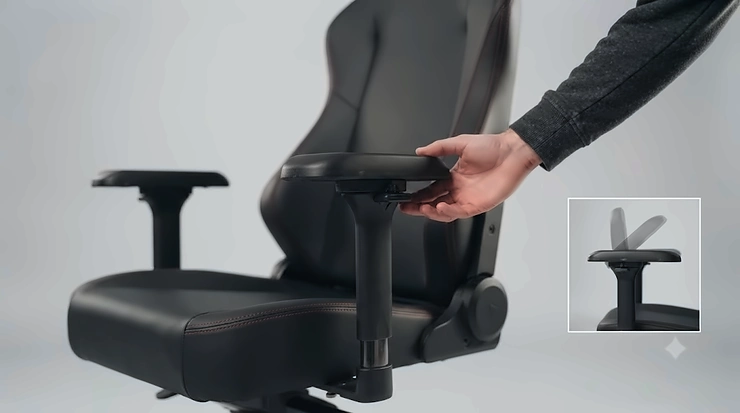
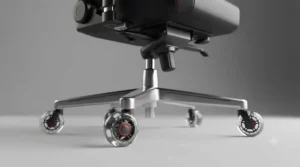
Armrests come next, and they’re the most commonly skipped step. Set them so your elbows rest at roughly 90 degrees with your shoulders relaxed, not hunched up to meet the armrest or drooping to reach it. Recline is personal, but competitive players generally do better locked closer to upright (100-110 degrees) during actual matches, saving the deeper recline for between-round breaks. In the first 30 days, the most common mistake is over-tightening the tension knob to stop the chair from rocking — instead, use the tilt-lock feature most of these chairs include, which holds position without fighting your own body weight all match long. Finally, build in a maintenance habit early: wipe leatherette weekly with a damp cloth, vacuum fabric seams monthly, and check caster wheels for hair and dust buildup every few weeks, since a dragging caster is a surprisingly common cause of chairs feeling “worn out” long before the foam actually is.
Real-World Scenarios: Matching the Chair to the Player
The university esports team member on a shared budget: commuting to the campus gaming lounge for practice blocks and grinding ranked from a dorm room the rest of the week, this player needs something that survives being adjusted by multiple teammates and doesn’t demand a C$800 outlay from a student budget. The ThunderX3 Solo 360 or Corsair TC100 RELAXED fit this profile well — durable frames, real adjustability, and a price that doesn’t compete with tuition.
The semi-pro grinding 8+ hour blocks daily: this is someone logging serious ladder hours ahead of qualifiers, where cumulative fatigue over a season matters more than any single session. Here, the lumbar precision of the AndaSeat Kaiser 4 or Razer Iskur V2 earns its price tag, since the marginal comfort gains compound across hundreds of hours rather than one weekend tournament.
The streamer-competitor hybrid who’s on camera as much as in-game: aesthetics and all-day comfort both matter, since this player is sitting through content sessions on top of competitive practice. The Secretlab TITAN Evo hits the sweet spot of visual presence and genuine ergonomic substance, while a player with a sponsorship or long-term studio budget might lean toward the Herman Miller x Logitech G Embody specifically because its understated design reads as “professional setup” on stream rather than “gamer aesthetic.”
Common Problems Competitive Players Run Into (And Real Fixes)
Problem: lower back pain by round three or four. This is almost always a lumbar depth issue, not a “bad chair” issue — even a well-reviewed chair like the Titan Evo will hurt if the lumbar depth dial is set wrong for your torso length. Solution: readjust in small increments over several sessions rather than assuming factory position is correct.
Problem: the chair sinks or rocks mid-match. Usually a loose tension knob or a gas-lift issue. Solution: check the tilt-lock is actually engaged before ranked queue, not just the recline angle — a shockingly common oversight.
Problem: overheating during long sessions, especially in leatherette chairs. Solution: fabric or mesh upholstery (like the ThunderX3 Solo 360‘s mesh variant) breathes noticeably better than PU leather or EPU leather options across every price tier.
Problem: armrests at the wrong height cause shoulder creep. Solution: readjust weekly, not once at unboxing — your posture habits shift as you get used to a new chair, and armrest height should shift with it.
Problem: budget chairs feeling “broken in” within months. Solution: this is frequently a foam density issue rather than a defect; chairs like the GTPLAYER are rated for shorter daily sessions by design, so rotating to a supplemental cushion for extended play extends usable life meaningfully.
How to Choose an Esports Gaming Chair
- Start with your typical session length. Under two hours most days, a budget chair like the Corsair TC100 RELAXED genuinely suffices; four-plus hours daily justifies spending up on lumbar precision.
- Check the weight and height rating against your actual body, not the marketing photo’s model — the AndaSeat Kaiser 4‘s 395 lb capacity exists for a reason.
- Prioritize lumbar adjustability over recline angle for competitive play, since you’ll spend more time upright and focused than reclined between rounds.
- Match upholstery to your climate and habits — mesh or fabric for hot rooms or sweaty hands, leatherette or EPU leather if you eat or drink at your setup often.
- Factor in warranty length as a proxy for confidence, since a 5-year warranty on the Titan Evo signals different manufacturer confidence than a 1-year budget warranty.
- Decide if bulk or single-purchase matters — teams and organizations often buy in volume, where value tiers like the Solo 360 make more sense per seat.
- Budget for the whole setup, not just the chair, since a great chair paired with a desk that’s the wrong height undoes most of the ergonomic benefit.
Esports Chair vs Traditional Office Chair
The line between an esports chair and a traditional office chair has blurred substantially over the past few years, but real differences remain. Traditional task chairs, the kind found in most Canadian workplaces, are generally designed around CSA and CCOHS ergonomic application standards for eight-hour desk work — CCOHS guidance on sitting positions emphasizes neutral posture, adjustable lumbar contact, and the ability to shift positions periodically throughout the day. Esports and gaming chairs borrow heavily from that same ergonomic science but add features task chairs rarely include: steeper recline ranges for between-round breaks, wider bolstered seats for the leaned-forward “locked in” posture common during ranked play, and — in chairs like the Titan Evo or Iskur V2 — more aggressive lumbar systems tuned for extended, high-focus sitting rather than intermittent office tasks.
| Factor | Esports Gaming Chair | Traditional Office Chair |
|---|---|---|
| Recline range | Often 150-165° | Typically 90-120° |
| Lumbar system | Multi-way adjustable, built for focus posture | Basic to moderate adjustment |
| Design intent | Sustained, locked-in competitive sitting | Task-switching desk work |
| Aesthetic | Racing/bucket-seat styling common | Neutral, professional |
| Price range | C$180-C$2,255+ in this guide | Wide, but rarely built for esports posture |
The takeaway from this comparison isn’t that one category is objectively better — it’s that a genuinely good office chair like the Herman Miller x Logitech G Embody proves the categories can converge at the high end, while budget gaming chairs like the GTPLAYER prioritize gamer-specific features (recline, footrest) over the subtler ergonomic engineering a serious office chair brand builds in. For pure competitive performance, the gaming-specific lumbar and recline features generally win out.
Competitive Gaming Chair Features That Actually Matter (And Those That Don’t)
Marketing copy on gaming chairs loves to lead with RGB lighting, oversized team-branded logos, and “racing DNA” language borrowed from motorsport seats that were never designed for sitting still for six hours. None of that affects performance. What actually matters: lumbar adjustability (multi-axis beats single-axis every time), seat foam density (firmer foam like the 65 kg/m³ rating found on both the Titan Evo and Kaiser 4 resists long-term sagging better than soft budget foam), and base build quality, since a wobbly five-star base undermines every other feature on the chair. Armrest adjustability matters more than most buyers expect going in — the difference between the Corsair TC100’s basic up-down movement and the Kaiser 4’s 5D system genuinely changes shoulder fatigue over a long session. What doesn’t matter nearly as much: maximum recline angle beyond about 150 degrees (few competitive players actually use full recline mid-session), and headrest pillow inclusion, since magnetic or integrated headrests like the Titan Evo’s tend to outperform strap-on pillows anyway.
Competitive Gaming Setup Standards: What Tournament Organizers Expect
Anyone gaming casually can sit however they want, but competitive gaming setup standards start mattering the moment you’re playing for stakes — ranked ladder points, a scrim block your team depends on, or an actual bracket. LAN events and organized tournaments increasingly treat the physical setup, chair included, as part of a competitor’s performance environment, not an afterthought. As esports infrastructure has grown across Canada — CBC’s coverage of Vancouver’s booming esports scene documented international events with multi-million-dollar prize pools hosted right here — the expectation for professional-grade setups, chairs included, has risen alongside the stakes. Competitive players preparing for bracket play should treat their chair the same way they treat their peripherals: tested, adjusted, and dialed in well before match day, not on it.
Tournament Seating Requirements & LAN Event Rules
Formal tournament seating requirements vary by organizer and venue, but common patterns have emerged across Canadian LAN circuits. Most venues provide house seating for bracket play rather than allowing personal chairs on stage, which means your at-home practice chair should be a training tool for posture habits, not something you expect to bring to finals. That said, qualifier rounds and open LAN practice areas frequently do allow personal chairs, and competitors who’ve trained on a properly adjusted lumbar system — rather than whatever chair happened to be at the venue — report noticeably less fatigue-driven performance drop-off in longer bracket runs. Practically, this means the chair you choose for home practice matters less for “will it be allowed on stage” and more for building the postural habits and endurance that carry over regardless of which chair you’re handed on tournament day.
Sponsorship-Grade Build: What Separates Pro-Level Chairs
“Sponsorship-grade” isn’t a marketing term Amazon listings use, but it’s a real distinction industry insiders draw between chairs built to survive a content creator’s daily 8-10 hour studio sessions for years versus chairs built for occasional home use. The Secretlab TITAN Evo and its special team-branded editions are a useful case study — the same underlying chair that pro orgs put their logo on is functionally identical to the retail version, meaning the “sponsorship-grade” distinction is really about warranty terms, bulk-order support, and proven longevity rather than a secretly superior product hidden from consumers. The Herman Miller x Logitech G Embody‘s 12-year warranty puts it in genuinely different territory — that’s not a chair rated for casual replacement, it’s rated for the kind of daily-use punishment a full-time streamer or team facility chair endures. For most competitive individual players, chasing “sponsorship-grade” specifically is overkill; the meaningful upgrade path is lumbar precision and foam density, not the marketing tier a chair happens to occupy in a brand’s lineup.
Long-Term Cost & Maintenance
A cost-per-use lens changes how these chairs stack up. The GTPLAYER at roughly C$220 amortized over a realistic 2-year lifespan for daily casual use works out to well under 50 cents a day. The Secretlab TITAN Evo at C$800 amortized over its 5-year warranty period (assuming it lasts that long, which aggregated review data suggests is realistic) lands in a similar daily range while delivering meaningfully better ergonomics for heavy daily use. The Herman Miller x Logitech G Embody, spread across its 12-year warranty, actually produces one of the lowest true cost-per-day figures on this entire list — around C$0.50/day at the low end of its price range — which is the honest argument in its favour beyond raw comfort. Maintenance costs stay low across the board: occasional replacement casters (roughly C$20-40 for a set), periodic re-tightening of frame bolts, and upholstery-specific cleaning products are the main recurring expenses, with leatherette and EPU leather chairs generally requiring less ongoing cost than fabric variants that can stain or wear at contact points.
Safety, Certifications & Canadian Standards
Gaming chairs sold in Canada fall under general furniture and consumer product safety expectations rather than a dedicated gaming-chair certification body, but the underlying ergonomic science they’re built on draws from the same standards that govern Canadian workplace furniture. The CSA’s Z412 office ergonomics application standard — referenced directly in CCOHS guidance — establishes that no single seated posture is correct for extended periods, which is precisely why the multi-way adjustability on chairs like the Kaiser 4 and Iskur V2 isn’t a luxury feature so much as an evidence-based design choice. For competitive players logging genuinely long hours, treating your chair setup with the same seriousness Health and Safety professionals treat workplace ergonomics — regular position changes, correctly set lumbar support, and periodic breaks — will do more for long-term performance than any single spec upgrade.
✨ Don’t Miss These Exclusive Deals!
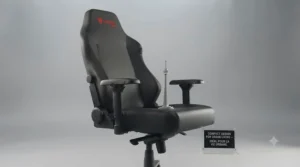
🔍 Take your competitive setup to the next level with these tournament-ready picks. Click on any highlighted chair to check current pricing and availability on amazon.ca. The right seat won’t win you the match, but it’ll make sure your body isn’t the reason you lose it.
Frequently Asked Questions
❓ What is the difference between an esports chair and a regular gaming chair?
❓ How much should I spend on a competitive gaming chair?
❓ Do esports gaming chairs actually improve performance?
❓ How long do gaming chairs typically last?
❓ Are mesh gaming chairs better than leather for tournaments?
Conclusion
There’s no single “best” esports gaming chair, only the best fit for how many hours you’re actually sitting and what your budget realistically allows. If you’re a casual-to-moderate ranked player, the Corsair TC100 RELAXED or GTPLAYER Gaming Chair deliver genuine comfort without pretending you need a C$900 investment piece. If you’re grinding toward qualifiers and logging real hours daily, the lumbar precision of the AndaSeat Kaiser 4 or Razer Iskur V2 starts paying for itself in reduced fatigue over a season. And if you’re building a long-term content or team setup where the chair needs to survive a decade of daily punishment, the Secretlab TITAN Evo remains the sensible mid-premium benchmark, with the Herman Miller x Logitech G Embody waiting at the top for anyone whose budget and hours both justify it.
Whatever you choose, treat setup and adjustment as seriously as the purchase decision itself — a great chair set up wrong will still hurt by round four, and a modest chair adjusted properly will outperform expectations. Your K/D ratio was never going to be decided by your chair. Your ability to still care about it in hour six just might be.
Recommended for You
- Hybrid Gaming Chair 2026: 7 Best Picks for Work; Play
- Console Gaming Chair 2026: 7 Picks That Actually Deliver
- PC gaming chair: 7 Best Picks for 2026 (Ergonomic amp; Pain-Free)
Disclaimer: This article contains affiliate links. As an Amazon Associate, I earn from qualifying purchases. If you purchase products through these links, we may earn a small commission at no additional cost to you.
✨ Found this helpful? Share it with your friends! 💬🤗
