
In This Article
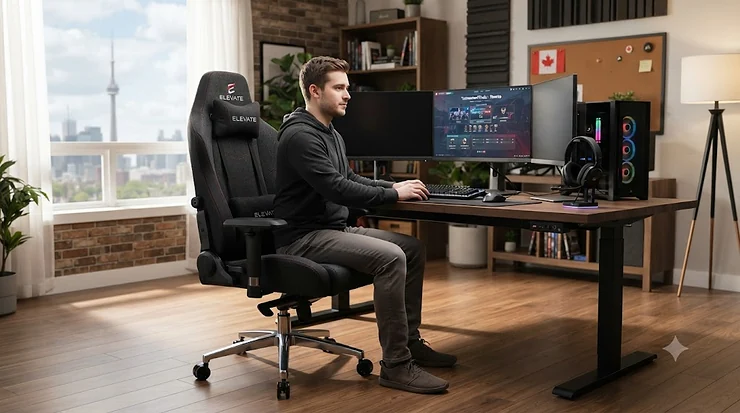
Ask anyone who has sat through a six-hour LAN bracket and they’ll tell you the same thing: your aim doesn’t fall apart because of nerves, it falls apart because your hip flexors have gone numb and your lower back is quietly screaming. A tournament gaming chair is built specifically for that scenario — not a two-hour evening session, but the kind of extended sitting durability that a real bracket run, a scrim block, or a full weekend of competitive play demands. This matters more than most players expect, because as CCOHS notes, no single sitting posture stays comfortable indefinitely, which is exactly why chair design — not willpower — decides who’s still sharp in game five.
This guide is built for a Canadian audience shopping on amazon.ca, and it’s organized around what actually separates a tournament-grade chair from a “gamer aesthetic” chair that just looks the part. We researched seven real, currently available models spanning budget, mid-range, and premium tiers, and we dug into verified specs and aggregated review sentiment rather than marketing copy. You’ll see the same themes repeat: pressure point relief through cushion density and lumbar geometry, frame materials that hold up over years of daily use, and adjustability that lets a chair fit bodies that don’t match the marketing photo.
Whether you’re outfitting a home LAN tournament chair setup, prepping for a weekend qualifier, or just tired of shifting in your seat every twenty minutes during ranked queue, the products below are chosen to answer one specific question: which chair keeps you comfortable and focused when the match doesn’t end after two hours?
Quick Comparison Table
| Chair | Tier | Recline Range | Lumbar System | Best For |
|---|---|---|---|---|
| Secretlab Titan Evo | Premium | 85–165° | 2-knob adjustable | All-round tournament use |
| AndaSeat Kaiser 4 | Premium | 90–165° | Adjustable + memory foam | Bigger frames, esports orgs |
| Razer Iskur V2 NewGen | Premium | Up to 152° | Built-in dynamic lumbar | Pressure point relief |
| Blacklyte Athena Pro | Mid-Premium | 90–165° | Adjustable lumbar pillow | Budget-conscious tournament players |
| Corsair TC200 | Mid-Range | 90–180° | Fixed bolster (no adjustable lumbar) | Dual office/gaming use |
| Herman Miller x Logitech G Embody | Ultra-Premium | Dynamic recline | Pixelated Support system | Daily marathon sessions, long-term investment |
| GTRacing / GTPlayer Series | Budget | 90–170° | Add-on lumbar pillow | First tournament setup on a tight budget |
The spread here matters because “tournament chair” isn’t one price point — it’s a category defined by behaviour, not cost. Looking at the table, the Razer Iskur V2 NewGen and Herman Miller x Logitech G Embody lean hardest into pressure point relief through their built-in lumbar engineering, while the GTRacing and Corsair TC200 models trade some of that sophistication for a lower barrier to entry. If your main pain point is a sore lower back by hour three, prioritize the chairs with dynamic or adjustable lumbar systems over ones relying on a bolted-on pillow.
💬 Just one click — help other Canadian parents make safer buying decisions too!😊
Top 7 Tournament Gaming Chairs: Expert Analysis
1. Secretlab Titan Evo — the tournament-standard all-rounder
The Secretlab Titan Evo earns its reputation the unglamorous way: it’s the chair most esports organizations actually deploy at scale, and that consistency matters more than flashy one-off features. Under the upholstery sits a steel frame paired with cold-cured foam that holds its shape through marathon gaming sessions rather than flattening out, which is precisely the extended sitting durability a tournament chair needs to earn its price tag. You get a choice between NEO Hybrid Leatherette and SoftWeave fabric, plus three size options (S, R, XL) so taller or larger players aren’t squeezed into a one-size-fits-most shell.
What most buyers overlook about the Titan Evo is the two-knob lumbar system — independent height and firmness adjustment means you can dial in support for your specific lower back curve rather than accepting a fixed bolster. Based on the spec comparison against rivals in this price bracket, the Titan Evo’s 165-degree recline and steel-frame stability give it a slight edge for players who shift position frequently during long matches. Aggregated review sentiment across major tech outlets consistently praises the build quality and describes the chair as a “brilliantly supportive” option that holds its own against pricier office-only ergonomic chairs.
Pros:
- ✅ Two-knob adjustable lumbar dials in pressure point relief precisely
- ✅ Three size options accommodate a wide range of body types
- ✅ Widely used by esports orgs, proving real-world tournament durability
Cons:
- ❌ Premium price puts it out of reach for casual buyers
- ❌ Assembly and armrest adjustment take longer than budget models
Expect this chair to sit in the C$700–C$850 range depending on upholstery and size — at the time of research, always check current pricing before buying, since Secretlab runs frequent special editions that shift availability.
2. AndaSeat Kaiser 4 — built for bigger frames and team deployment
The AndaSeat Kaiser 4 picked up traction with esports organizations partly because it does one thing extremely well: accommodate a wide range of body sizes without sacrificing structural rigidity. The wider seat pan and taller backrest give it noticeably more room than the Titan Evo, which matters if you’re over 6’2″ or simply prefer a chair that doesn’t feel like a bucket seat.
Key specs translate directly into real comfort here — the memory foam lumbar and headrest pillows aren’t just accessories, they’re doing active work reducing pressure point buildup during long sessions, while the steel-and-aluminum frame construction is rated for higher weight capacities than most competitors in this price class. Here’s what to weigh: if you’re specifically choosing between AndaSeat and Secretlab, the Kaiser 4 tends to win on room-to-move and raw durability under heavy daily use, while the Titan Evo edges ahead on fine-tuned lumbar precision. Reviewers consistently note that AndaSeat’s more recent generations have closed the gap on build quality that used to separate it from the market leader, with the Kaiser line adopted as an official chair by at least one top-50 earning esports team.
Pros:
- ✅ Wider seat pan suits larger or taller players comfortably
- ✅ Reinforced frame handles heavy daily tournament-level use
- ✅ Chosen as an official chair by professional esports organizations
Cons:
- ❌ Bulkier footprint needs more desk-area clearance
- ❌ Leatherette variants can run warm during long sessions
Pricing typically lands in the C$750–C$900 range at the time of research; prices may vary by colourway and upholstery choice.
3. Razer Iskur V2 NewGen — engineered specifically for pressure point relief
If your priority keyword is genuinely pressure point relief, the Razer Iskur V2 NewGen deserves the top spot on your shortlist. Unlike chairs that bolt on a separate lumbar pillow, this model builds dynamic lumbar support directly into the backrest frame, flexing to track your spine’s curve as you shift position rather than holding one fixed shape.
What that means in practice: the built-in lumbar system continuously adapts as you lean forward to peek a corner or sink back during a loading screen, instead of leaving a gap that a static pillow would. Razer’s own tournament credentials back this up — the Iskur V2 NewGen was named the official chair of VCT EMEA and Game Changers EMEA starting in 2026, signalling that competitive organizers trust its long-session performance under real broadcast conditions. Based on the spec comparison, this chair’s recline tops out slightly lower than the Titan Evo or Kaiser 4, which is a deliberate trade-off — Razer prioritized spinal tracking over maximum lay-back angle, a sensible call for players who sit upright and lean in rather than recline flat.
Pros:
- ✅ Dynamic built-in lumbar tracks spine movement automatically
- ✅ Official chair partner for major competitive tournament circuits
- ✅ 4D armrests allow precise positioning for long keyboard/mouse sessions
Cons:
- ❌ Lower maximum recline than some premium rivals
- ❌ Firmer seat cushion takes an adjustment period for some sitters
Expect a price point in the C$750–C$850 range, with limited team-branded editions occasionally selling at a modest premium above the base model.
4. Blacklyte Athena Pro — tournament build quality at a friendlier price
The Blacklyte Athena Pro is the chair to watch if you want tournament-tier engineering without paying full premium rates. Blacklyte built its reputation making near-replica chairs that mirror the construction quality of the market leaders, and the Athena Pro is now the official seat of at least one top-tier esports organization, proof it holds up under genuine competitive scrutiny rather than just marketing claims.
Real-world meaning here matters: the 90–165-degree recline range and steel frame construction put it directly in competition with chairs costing considerably more, while the adjustable lumbar pillow — rather than a fully integrated dynamic system — keeps manufacturing costs down without sacrificing the core support tournament players need. Based on the spec comparison, this is the chair for buyers who want 80% of the Titan Evo’s durability and comfort profile at a noticeably lower price. Aggregated sentiment around Blacklyte’s rapid rise notes it’s become an “aggressive” challenger brand precisely because it delivers comparable build quality at accessible pricing, though it carries a smaller long-term review history than the more established names on this list.
Pros:
- ✅ Near-premium build quality at a more accessible price
- ✅ Official chair for professional tournament team deployment
- ✅ Solid recline range matches pricier competitors
Cons:
- ❌ Shorter track record than long-established competitors
- ❌ Lumbar system is a pillow, not a fully integrated dynamic mechanism
Look for this one in the C$550–C$700 range, making it a strong mid-tier pick for anyone building their first serious LAN tournament chair setup.
5. Corsair TC200 — the durable dual-purpose workhorse
The Corsair TC200 takes a different approach: instead of chasing esports sponsorships, it aims squarely at durability and understated design for players who also use the same chair for work. Its steel frame construction, paired with a Class 4 gas lift and five-star steel base, gives it genuine extended sitting durability, and the racing-style bolstering keeps you positioned properly through long stretches without the aggressive “gamer” styling some players want to avoid in a shared space.
What most buyers overlook here is that the TC200 skips adjustable lumbar support entirely in favour of fixed, generously padded bolstering — a deliberate trade-off that keeps assembly simple and pricing down. Reviewers consistently note the chair feels remarkably sturdy and rattle-free even after extended daily use, and the wider seat pan (expanded specifically from Corsair’s earlier T3 Rush model) accommodates bigger frames more comfortably. Based on the spec comparison, this is the chair for someone who wants marathon gaming sessions comfort during matches but also spends the rest of the day working from the same seat — it just won’t give you the fine lumbar tuning that back-pain-prone players may need.
Pros:
- ✅ Sturdy steel frame with reinforced five-point base for longevity
- ✅ Doubles comfortably as an office chair without looking overtly “gamer”
- ✅ Quiet, rattle-free construction even after months of daily use
Cons:
- ❌ No adjustable lumbar support — fixed bolstering only
- ❌ Bigger footprint may crowd smaller gaming desks
At the time of research, this chair typically sits in the C$500–C$600 range, positioning it as a genuinely durable gaming chair for long sessions without premium pricing.
6. Herman Miller x Logitech G Embody — the long-term ergonomic investment
For players who treat their setup as a career tool rather than a hobby purchase, the Herman Miller x Logitech G Embody sits at the top of the market for a reason. Its Pixelated Support system distributes your weight across hundreds of individually flexing points that conform to micro-movements — a genuinely different engineering approach from the foam-and-frame formula every other chair on this list uses.
The real-world payoff is meaningful: rather than relying on a single lumbar pad, the entire backrest reshapes itself continuously as you move, which is about as thorough a pressure point relief system as currently exists in a gaming-adjacent chair. Based on the spec comparison, this is overkill for someone who games two hours a night, but for players logging six-plus hour tournament days multiple times a week, the industry-leading 12-year warranty reframes the sticker price as a cost-per-hour calculation rather than an upfront expense. Reviewers and outlets covering the premium chair segment consistently describe it as the ergonomic ceiling of the category — the chair other premium models are still trying to catch up to on pure comfort engineering, even if they beat it on esports branding and team partnerships.
Pros:
- ✅ Pixelated Support system offers unmatched pressure point distribution
- ✅ Industry-leading 12-year warranty reflects genuine long-term build confidence
- ✅ No branded “gamer” aesthetic — blends into any home office
Cons:
- ❌ Substantially higher upfront cost than every other chair here
- ❌ Lacks esports team branding some tournament players specifically want
This model typically runs C$2,600–C$2,850 at the time of research — a serious investment, but one to weigh against years of daily marathon gaming sessions rather than a single tournament season.
7. GTRacing / GTPlayer Series — the honest budget starting point
Not every player walking into their first LAN needs — or can justify — a C$700 chair, and the GTRacing / GTPlayer Series exists specifically for that reality. Built around a metal frame with high-density foam padding, it covers the core mechanical requirements — recline, height adjustment, and a basic lumbar pillow — without the refinements that drive up premium pricing.
Here’s what to weigh honestly: aggregated review sentiment describes GTPlayer models as reliable for one to three years of regular use, with the metal frame and gas lift holding up well while faux leather variants show wear sooner than fabric options. That’s a meaningful piece of practical guidance — if durable gaming chair for long sessions is your top priority on this budget tier, lean toward the fabric versions over leatherette. The recline range up to 170 degrees is genuinely competitive with premium chairs, even if the cushion density and lumbar precision don’t match the higher tiers. For a first tournament setup, a LAN night with friends, or a secondary chair, this is a defensible starting point rather than a compromise you’ll regret immediately.
Pros:
- ✅ Genuinely low barrier to entry for a first tournament chair
- ✅ Competitive recline range rivals pricier premium models
- ✅ Fabric versions hold up reasonably well over one to three years
Cons:
- ❌ Shorter realistic lifespan than steel-frame premium competitors
- ❌ Lumbar support relies on an add-on pillow, not integrated engineering
Expect pricing in the C$220–C$320 range, making it one of the most accessible entries into serious tournament seating on amazon.ca.
Setting Up Your Chair for Marathon Gaming Sessions
Getting a good chair is only half the equation — how you set it up over the first month determines whether you actually get the durability and comfort the spec sheet promises. Start with seat height: your knees should sit roughly level with your hips, feet flat on the floor, which mirrors the same guidance occupational health bodies give for any prolonged-sitting workstation. Next, dial in lumbar support so it fills the natural curve of your lower back rather than pushing your spine forward — too firm and it creates its own pressure point, too soft and it does nothing during hour four of a bracket run.
A common first-30-days mistake is leaving the armrests at factory height, forcing your shoulders to hunch toward your keyboard. Adjust them so your elbows sit at roughly 90 degrees with your forearms level. On maintenance: tighten the base bolts after the first two weeks of use, since new frames settle slightly, and avoid direct sunlight on leatherette models to prevent premature cracking. A quarterly caster and gas-lift check takes five minutes and adds real years to any chair’s working life, regardless of price tier.
Real-World Scenarios: Matching Chairs to Tournament Players
The weekend LAN warrior: You play competitively two or three weekends a month but work a desk job the rest of the week. The Corsair TC200 or Blacklyte Athena Pro make sense here — durable enough for tournament weekends, understated enough to not look out of place at a normal office desk.
The daily grinder chasing a pro slot: You’re logging six-plus hours a day in scrims and ranked queue, treating this as career preparation. The Secretlab Titan Evo, AndaSeat Kaiser 4, or Razer Iskur V2 NewGen justify their price through daily wear resistance and precision lumbar tuning that a casual chair simply can’t sustain.
The budget-conscious student building their first setup: Tight budget, first real gaming chair, uncertain how often tournaments will actually happen. The GTRacing / GTPlayer Series covers the essentials without locking up money you might need elsewhere, with room to upgrade once your competitive schedule solidifies.
Common Problems and Practical Solutions
Lower back pain by hour three usually traces back to inadequate lumbar support rather than a “bad” chair overall — try repositioning or upgrading the lumbar pillow before replacing the whole unit. Numb legs or thighs typically mean your seat height is wrong relative to your desk; if your feet dangle or your thighs press hard into the seat edge, adjust height first and add a footrest if needed. A chair that wobbles or squeaks after a few months often just needs the base bolts retightened — a five-minute fix that gets skipped constantly. And if you’re overheating in leatherette during long sessions, that’s a materials issue specific to PU leather retaining body heat; switching to a fabric or mesh upholstery option solves it directly rather than fighting it with a desk fan.
How to Choose a Tournament Gaming Chair
- Prioritize lumbar adjustability over recline angle. A dynamic or multi-point lumbar system does more for marathon gaming sessions comfort than an extra 10 degrees of recline.
- Match the frame material to your usage frequency. Steel frames justify their weight and price if you’re sitting five-plus hours regularly; lighter frames are fine for occasional weekend tournaments.
- Check real weight and height capacity, not marketing photos. Every model on this list lists a specific capacity — confirm your frame fits comfortably within it, not right at the ceiling.
- Weigh upholstery against your climate and space. Fabric breathes better for long sessions; leatherette wipes clean easier but runs warmer.
- Factor in warranty length as a durability signal. A longer warranty usually reflects genuine manufacturer confidence in long-term build quality, not just a marketing perk.
- Consider whether the chair needs to double as an office chair. If it does, deprioritize aggressive esports branding in favour of adjustability and a professional look.
- Budget for the whole tier, not just the sticker price. Premium chairs often justify cost-per-hour over years; budget chairs are honest trade-offs, not failures — just plan your replacement timeline accordingly.

Common Mistakes When Buying a Tournament Gaming Chair
The most frequent mistake is buying based on esports branding alone rather than checking whether the underlying frame and lumbar system fit your actual body and sitting habits. A second common error is ignoring weight and height capacity — a chair rated for someone below your frame will wear out its gas lift and frame joints far faster than the warranty period suggests. Buyers also frequently skip the assembly instructions around bolt torque, leading to squeaks and wobble that get blamed on the chair rather than the setup. Finally, many players chase maximum recline angle as the headline feature when, for tournament use specifically, lumbar precision and cushion density matter more for staying focused through hour four than how far the backrest tips.
Tournament Chair vs Standard Office Chair
A standard office chair and a genuine LAN tournament chair look similar on paper — both have a seat, backrest, and gas lift — but they diverge sharply in cushion density and recline range. Office chairs are engineered for shorter, more varied sitting sessions punctuated by meetings and walking around; tournament chairs are built to hold one working posture for hours at a stretch without the foam compressing or the lumbar support flattening out. The recline range also tells the story: most office chairs cap around 110–120 degrees, while every chair on this list reaches at least 152 degrees, reflecting genuine competitive-gaming use patterns where players lean back during downtime between rounds. That said, the line has blurred — models like the Corsair TC200 and Herman Miller x Logitech G Embody are explicitly designed to function as both, which is worth considering if your chair needs to survive a workday before it survives a tournament.
Long-Term Cost and Maintenance
Total cost of ownership matters more than sticker price for a chair you’ll sit in for years. A budget chair at C$250 that needs replacing every 18 months costs more over five years than a C$750 premium chair backed by a multi-year warranty — do the simple math before assuming budget always wins. Maintenance costs stay low across the board: replacement casters run a modest amount if they wear out, and most premium brands sell individual lumbar pillows or upholstery panels rather than forcing a full chair replacement over one worn component. Fabric upholstery generally outlasts leatherette in the CAD-per-year comparison, since leatherette cracking is the single most common reason gaming chairs get replaced early, regardless of brand or price tier.
Safety, Regulations, and Sitting Guidelines in Canada
Canada doesn’t regulate consumer gaming chairs directly the way it does workplace furniture, but the underlying ergonomic principles still apply at home. Occupational health guidance in Canada recommends chairs that let the spine align in a neutral posture and support frequent position changes, which is exactly the logic behind adjustable lumbar systems and wide recline ranges on the chairs above. If you’re setting up a shared LAN space or a small tournament venue, it’s worth applying the same basic checklist workplaces use: feet flat or supported, knees roughly level with hips, and armrests that don’t force shoulders upward. None of the products reviewed here require CSA certification the way workplace furniture in regulated settings sometimes does, but choosing CSA-adjacent build quality — steel frames, rated weight capacities, tested gas lifts — still reduces real injury risk over years of daily use.
What to Expect: Real-World Performance During Long Sessions
Specs on a page translate into specific, felt experiences once you’re four hours into a bracket. A 165-degree recline means you can genuinely rest during a match delay without leaving your seat, while a 2-knob lumbar system means you can loosen support slightly during casual queue and firm it back up before a ranked match. Weight capacity headroom (a chair rated well above your actual weight) tends to correlate with a firmer, more stable feel rather than the seat compressing noticeably by hour three. And the difference between fabric and leatherette becomes very obvious around the ninety-minute mark in a warm room — this is where mesh and breathable SoftWeave-style materials earn their reputation, especially relevant for Canada’s esports community, which has grown steadily alongside broader gaming participation nationwide, as local tournaments and LAN events have become more common outside major cities.
Frequently Asked Questions
❓ What's the difference between a gaming chair and a tournament gaming chair?
❓ How much should I spend on a durable gaming chair for long sessions?
❓ Do gaming chairs actually help with back pain during marathon gaming sessions?
❓ How long does a tournament-grade gaming chair typically last?
❓ What should I check before buying a gaming chair on amazon.ca?
Conclusion
Picking a tournament gaming chair for Canadian buyers really comes down to matching the chair’s engineering to how often you’re actually sitting in it under competitive pressure. If you’re chasing genuine pressure point relief and expect to log hours daily, the Secretlab Titan Evo, AndaSeat Kaiser 4, and Razer Iskur V2 NewGen justify their premium pricing through adjustable lumbar systems and frame durability that hold up to real tournament schedules. If your budget needs to stretch further, the Blacklyte Athena Pro and Corsair TC200 deliver a meaningful share of that performance without the top-tier price tag, while the GTRacing / GTPlayer Series remains a genuinely honest entry point for a first serious setup. And for players treating competitive gaming as a long-term pursuit rather than a hobby, the Herman Miller x Logitech G Embody represents the ceiling of what pressure point engineering currently looks like in this category.
Whichever tier fits your situation, the underlying advice stays consistent: prioritize adjustable lumbar support, confirm the frame and weight capacity match your body honestly, and remember that extended sitting durability is earned through steel frames and quality foam, not marketing language on a product page. Check current pricing and availability before you buy, since all figures above are approximate at the time of research.
✨ Ready to Upgrade Your Setup?
🎮 🔍 Compare current prices and availability on the chairs above before your next tournament weekend. A properly fitted chair pays for itself in focus alone — click through to check today’s listings and find the one that matches your setup and budget.
Recommended for You
- Best Work Gaming Chair Canada 2026: 7 Picks That Actually Deliver
- Pedestal Gaming Chair: 7 Best Picks for 2026
- Rocker Gaming Chair 2026: 7 Best Picks With Speakers & Subwoofer
Disclaimer: This article contains affiliate links. As an Amazon Associate, I earn from qualifying purchases. If you purchase products through these links, we may earn a small commission at no additional cost to you.
✨ Found this helpful? Share it with your friends! 💬🤗
