
In This Article
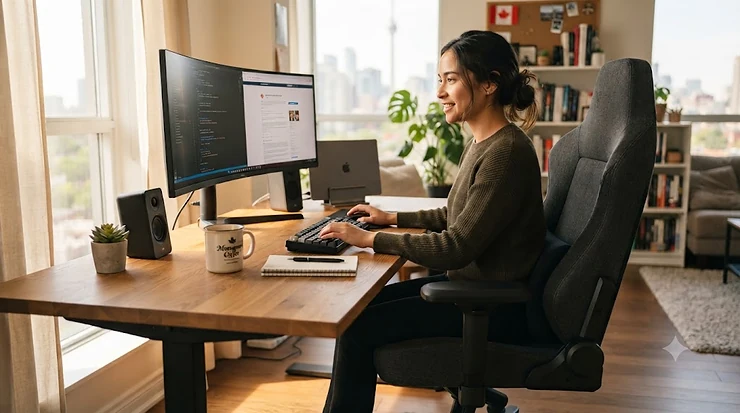
Here’s a confession most gamers won’t make out loud: somewhere between the third Zoom call of the day and the fourth “can everyone see my screen okay?”, a lot of us started quietly resenting our own chairs. Not because they’re uncomfortable — most racing-style rigs are plenty comfortable — but because they look like they belong in a Formula 1 pit lane, not three feet behind you while your camera is on. A subtle gaming chair is exactly what it sounds like: a chair built with real gaming ergonomics — deep recline, adjustable lumbar, a base that can take a beating — but dressed in the kind of restrained, single-tone upholstery that reads as “office furniture” rather than “esports sponsorship.” No racing stripes, no oversized logos stitched into the headrest, no colour combination that makes your coworkers ask what team you play for.
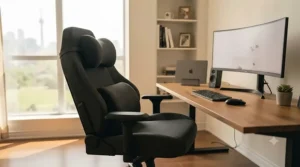
That distinction matters more in 2026 than it did a few years ago. Between hybrid workers getting called back onto video more often and a wave of return-to-office policies rolling across federal and provincial workplaces, a growing number of people need one chair that does double duty: comfortable enough for a six-hour gaming session, unremarkable enough for a client call. As the Wikipedia entry on gaming chairs points out, most of these chairs are still marketed primarily on looks, which is exactly why “loud” has been the default aesthetic for so long — and why finding a genuinely understated design takes some digging.
This guide does that digging for you. We researched seven real, currently available chairs spanning budget mesh options to premium builds, compared them honestly using their actual specifications and aggregated review sentiment, and broke down what “looks professional” really costs in features you might miss. No invented reviews, no inflated claims — just what the spec sheets and real owners actually say.
Quick Comparison Table: Subtle Gaming Chairs at a Glance
| Chair | Style | Price Range (CAD) | Best For |
|---|---|---|---|
| Corsair TC100 Relaxed | Fabric, wide seat | Around C$300 | Best budget pick |
| Duramont Ergonomic Chair | Mesh, office-first | C$300-C$420 range | Best for a true office look |
| noblechairs HERO | Fabric or PU leather | C$420-C$550 range | Best mid-range build quality |
| Autonomous ErgoChair Pro | Mesh, task-chair shape | C$600-C$700 range | Best for daily hybrid work |
| AndaSeat Kaiser 3 | Linen fabric | C$600-C$800 range | Best cozy neutral upholstery |
| Secretlab Titan Evo | SoftWeave Plus fabric | C$650-C$950 range | Best all-round comfort |
| Razer Fujin Pro | Breathable mesh | C$1,400-C$1,500 range | Best boardroom-blend premium |
Looking at the spread above, there’s a clear line between chairs that borrow office-chair materials (mesh, muted fabric) to look the part, and chairs that are genuinely built on office-chair architecture and happen to be gaming-capable, like the Autonomous ErgoChair Pro. Budget buyers shouldn’t assume cheaper automatically means less subtle — the Corsair TC100 Relaxed in its grey colourway is arguably less flashy than some options twice its price. The premium end, meanwhile, is where you start paying for materials science (memory foam density, cold-cure foam, breathable weave engineering) rather than just a calmer colour palette.
💬 Just one click — help others make better buying decisions too!😊
Top 7 Subtle Gaming Chairs: Expert Analysis
1. Corsair TC100 Relaxed — best budget pick for a calm grey finish
The standout here is simple: this is one of the few sub-C$350 gaming chairs sold with a genuinely neutral grey fabric option instead of the usual red-and-black combo. Corsair built the TC100 RELAXED with a wider 375mm seat, relaxed side bolstering (meaning less aggressive hip-hugging than typical racing seats), and a Class 4 gas lift offering 100mm of height adjustment. The backrest reclines to 150 degrees, and it ships with a detachable lumbar pillow plus a memory foam neck pillow rather than sewn-in bolstering.
Based on the spec comparison against similarly priced chairs, the TC100’s wider seat pan is the real differentiator — most budget gaming chairs squeeze you into a narrow bucket shape that reads as “gaming” from across a room even before you notice the colour. This one doesn’t. It’s a strong fit for anyone furnishing a first home office or a student desk who wants something that won’t clash with a beige rental apartment.
Reviewers consistently note that the fabric upholstery on the Relaxed line breathes noticeably better than the brand’s leatherette version, though a few mention the included pillows feel like an afterthought rather than integrated support. Retailers list the grey/black and light grey colourways as intermittently in and out of stock, so availability can be inconsistent.
Pros:
- ✅ Wide 375mm seat avoids the cramped racing-bucket look
- ✅ Neutral grey/black colourway with no visible branding on the seat face
- ✅ 150-degree recline and 100mm height range for the price
Cons:
- ❌ Included pillows feel less integrated than sewn-in lumbar systems
- ❌ Neutral colourways sell out faster than louder ones
At around C$300, the Corsair TC100 Relaxed is hard to beat as an entry point into subtle seating — you’re trading some long-term durability for a genuinely low price of entry.
2. Duramont Ergonomic Office Chair — best for looking like it was never a gaming chair at all
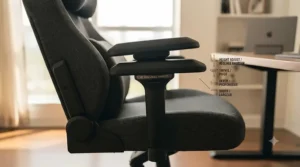
This one barely reads as a gaming chair, which is exactly the point of including it. Duramont built this around a breathable mesh backrest, a thick foam seat cushion, adjustable 3D armrests, and rollerblade-style casters more commonly seen on task chairs than gaming rigs. The frame supports up to roughly 150 kg (330 lb), and the backrest reclines between 90 and 155 degrees with a lockable tilt tension.
What most buyers overlook about this style of chair is that mesh backing does two jobs at once: it keeps you cooler during long sessions than foam-backed alternatives, and it visually reads as “corporate” because that’s where mesh office chairs have lived for the past two decades. If your goal is a chair that a client on a video call wouldn’t clock as gaming furniture at all, this is closer to that than anything with a racing silhouette.
Aggregated owner feedback frequently highlights the lumbar adjustability — up, down, in, and out — as unusually thorough for the price bracket, while a recurring complaint centres on the armrests feeling less sturdy than the rest of the frame under sustained pressure.
Pros:
- ✅ Genuine mesh office-chair silhouette, zero gaming visual cues
- ✅ 4-way adjustable lumbar support at a budget price point
- ✅ Rollerblade casters glide quietly on hard floors
Cons:
- ❌ Armrests reported as the weakest structural point
- ❌ Less body-hugging support than dedicated gaming chairs during long recline
In the C$300-C$420 range, the Duramont Ergonomic Office Chair delivers real ergonomic engineering without a hint of the aesthetic it’s quietly replacing.
3. noblechairs HERO — best mid-range build with a diamond-stitched, subdued finish
The HERO’s standout is its restraint: a single-tone Anthracite fabric with tone-on-tone diamond stitching instead of the contrast piping most competitors use to signal “gaming chair” from ten feet away. Built on a powder-coated solid aluminum five-star base with 60mm dual-material castors, it supports up to 150 kg and includes an integrated (not add-on) lumbar system.
Here’s what to weigh: the HERO shares a manufacturing lineage with several premium chairs on this list, and several longtime owners in enthusiast forums have noted the build quality lands close to chairs costing considerably more. The firmness is deliberate — noblechairs designs the seat pan to discourage slouching rather than to feel plush on first sit, which suits people who spend hours at a desk more than people who want a recliner.
Reviewers consistently describe the seat as noticeably firmer than Secretlab’s fabric line, something people either love for posture or find too rigid after extended use. One recurring theme across owner reports is genuinely positive experiences with noblechairs’ customer service on manufacturing defects, which matters given this is a bootstrapped frame relying on precise screw-hole alignment.
Pros:
- ✅ Tone-on-tone Anthracite fabric with no contrast piping
- ✅ Solid aluminum five-star base rated to 150 kg
- ✅ Diamond stitching reads as upholstery, not branding
Cons:
- ❌ Firm seat pan won’t suit everyone’s preference
- ❌ Some owners report inconsistent factory quality control
At C$420-C$550, the noblechairs HERO is the chair enthusiast forums keep pointing to when someone asks for “the professional-looking one.”
4. Autonomous ErgoChair Pro — best for people who work more hours than they game
The standout feature is that this chair wasn’t designed as a gaming chair that learned to behave — it’s a genuine ergonomic office chair with nine points of adjustment that also happens to hold up during long sessions. German-engineered breathable mesh wraps the back, seat, and headrest, keeping total weight around 22 kg, which makes it far easier to move between rooms than most steel-framed gaming chairs.
Based on the spec sheet, the seat height range of 18.5 to 22 inches and the 22-degree synchro-tilt make this genuinely adjustable rather than adjustable-on-paper, and the 300 lb weight capacity sits comfortably ahead of many chairs at this price. One outlet’s review called the professional-enough-for-an-office, cool-enough-for-a-gamer’s-den balance the chair’s defining trait, and that’s really the entire pitch of this category distilled into one product.
Aggregated reviews frequently cite the adjustable lumbar and armrest system as genuinely comparable to chairs costing hundreds more, while the most common complaint is that the mesh seat, while breathable, offers less plush comfort than foam-seated alternatives during marathon sessions.
Pros:
- ✅ Lightweight mesh build in muted colourways like Cool Gray
- ✅ Nine adjustment points, genuinely tunable to your body
- ✅ Reads as a task chair, not a gaming chair, at a glance
Cons:
- ❌ Mesh seat less plush than foam during 6+ hour sessions
- ❌ Reviewers describe it as solid rather than standout at its price
In the C$600-C$700 range, the Autonomous ErgoChair Pro is the pick for anyone whose desk sees more spreadsheets than raid bosses.
5. AndaSeat Kaiser 3 — best cozy neutral linen upholstery
What makes this one stand out is the linen fabric option, sold specifically in muted Ash Gray and Carbon Black — a genuinely different texture from the smooth fabric or leatherette every other chair on this list uses. AndaSeat built the Kaiser 3 with 4D magnetic armrests, a magnetic (strapless) memory foam head pillow, a built-in 4-way adaptive lumbar system, and recline from 90 to 165 degrees with a rocking mechanism.
The spec sheet won’t tell you this, but linen upholstery behaves differently in daily life than woven polyester fabric: it resists that slightly plasticky sheen cheaper fabrics develop after a year of use, though it also shows oil and dust more readily if you eat at your desk. What most buyers overlook is that the magnetic accessory system (armrests, headrest) means you can swap components without needing tools, which matters if you eventually want to soften the look further with different accent colours.
Aggregated review sentiment on the Kaiser 3 line consistently praises the seat’s spaciousness for taller users and the quality of the lumbar adjustment, while a recurring critique is that the recline mechanism can feel loose at maximum angle for heavier users.
Pros:
- ✅ Linen fabric texture reads as furniture, not upholstered plastic
- ✅ Magnetic, tool-free armrest and headrest swaps
- ✅ 4-way lumbar system with genuine adjustment range
Cons:
- ❌ Linen shows stains more visibly than PVC leather options
- ❌ Recline mechanism reported loose at full recline for heavier users
Priced in the C$600-C$800 range depending on size, the AndaSeat Kaiser 3 is the chair for anyone who wants “cozy neutral” rather than “corporate neutral.”
6. Secretlab Titan Evo — best all-round comfort in a restrained colourway
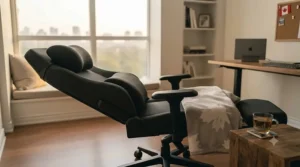
The Titan Evo’s Triple Black and Cookies & Cream SoftWeave Plus colourways are the standout here — genuinely muted fabric options in a lineup otherwise dominated by esports collaborations and saturated colour drops. Underneath, it’s built on a steel internal frame with an aluminum wheelbase, cold-cure foam rated to 130 kg in the Regular size, a 4-way adjustable lumbar system with separate depth and height dials, and a magnetic memory foam headrest.
Based on the spec comparison, the cold-cure foam is the meaningful upgrade over cheaper polyurethane foam: it resists the permanent seat-shape “bucketing” that budget chairs develop after a year or two of daily use. One reviewer who spent over a month testing the chair specifically noted it changed their assumptions about gaming-chair ergonomics, describing the seat as comfortable enough to rival dedicated ergonomic office chairs despite the gaming-chair category it sits in.
Reviewers consistently describe the recline and tilt tension as some of the most adjustable in the category, while the most common criticism is that the headrest cooling gel stays neutral rather than actively cooling, a marketing claim some owners feel oversells the actual sensation.
Pros:
- ✅ Triple Black and Cookies & Cream are genuinely restrained colourways
- ✅ Cold-cure foam resists long-term seat bucketing
- ✅ 4-way lumbar system with independent depth and height control
Cons:
- ❌ “Cooling” headrest gel is subtle at best, per owner reports
- ❌ Add-ons (armrest upgrades, XL sizing) increase the price quickly
Spanning the C$650-C$950 range depending on size and fabric, the Secretlab Titan Evo remains the chair most often recommended when someone wants one seat that does everything reasonably well.
7. Razer Fujin Pro — best premium chair for genuinely disappearing into an office
If subtlety is the entire brief, this is the chair that wins outright — one reviewer described it as looking like it “wouldn’t be entirely out of place within a beige-washed corpo office,” which is about as complete an endorsement of understated design as this category gets. Razer built the Fujin Pro around a lightweight aluminum alloy frame with mesh covering the seat, back, and headrest, fully lockable armrests, and an aesthetic so restrained it draws criticism from gaming-focused reviewers for being visually plain.
Here’s what to weigh: at this price point, you’re not paying for gaming aesthetics at all — you’re paying for the same category of engineering found in premium ergonomic office chairs, with a few Razer badges as the only visual nod to its gaming lineage. Multiple outlets independently compared it to considerably pricier ergonomic chairs and found it held its own on comfort and adjustability, which is a rare thing to say about a chair marketed primarily to gamers.
Reviewers consistently cite the build quality and lumbar support as best-in-class, while the most repeated criticism across independent reviews is the “very basic aesthetics” — ironic, given that’s the entire selling point for this particular buyer.
Pros:
- ✅ Aesthetic reviewers describe as genuinely office-appropriate
- ✅ Lightweight aluminum alloy frame with full mesh coverage
- ✅ Comfort and adjustability rival pricier ergonomic-only chairs
Cons:
- ❌ Limited availability in some regions and colourways
- ❌ Premium price sits well above most gaming-chair budgets
At roughly C$1,400-C$1,500, the Razer Fujin Pro is the splurge pick for anyone who wants zero compromise between “looks like a boardroom chair” and “performs like a gaming chair.”
Top 7 Chairs: Specs & Ratings Comparison
| Chair | Frame/Material | Max Weight | Recline | Best For |
|---|---|---|---|---|
| Corsair TC100 Relaxed | Steel, fabric | 120 kg | Up to 150° | Budget-conscious buyers |
| Duramont Ergonomic Chair | Steel, mesh | ~150 kg | 90-155° | True office aesthetic |
| noblechairs HERO | Aluminum, fabric | 150 kg | Up to 135° | Firm, professional feel |
| Autonomous ErgoChair Pro | Plastic/mesh | ~136 kg | 22° synchro-tilt | Daily hybrid workers |
| AndaSeat Kaiser 3 | Aluminum, linen | ~180 kg (XL) | 90-165° | Tall users, cozy texture |
| Secretlab Titan Evo | Steel/aluminum | 130 kg (Regular) | Deep recline | All-round comfort |
| Razer Fujin Pro | Aluminum alloy, mesh | Not publicly listed | Full recline | Maximum subtlety |
This table underscores something worth calling out directly: weight capacity and recline range vary more than price alone would suggest, so a mid-priced chair like the noblechairs HERO can actually out-support a pricier option depending on your body type. If you’re taller or heavier than average, the AndaSeat Kaiser 3‘s XL sizing deserves a closer look regardless of budget. Meanwhile, anyone prioritizing weight savings for a home office that gets rearranged often should note the Autonomous ErgoChair Pro‘s notably lighter frame.
✨ Don’t Miss These Exclusive Deals!
🔍 Take Your Home Office Setup to the Next Level. Click on any highlighted chair above to check current pricing and availability. Prices shift often, so it’s worth comparing a couple of colourways before you commit — the neutral options tend to cost the same as the loud ones, you just have to look a little harder to find them in stock.
What Is a Subtle Gaming Chair? How to Choose One
A subtle gaming chair is a gaming-grade chair — built for recline, lumbar support, and long sitting sessions — finished in muted, single-tone upholstery instead of the racing stripes and bold branding typical of the category. Choosing one comes down to weighing ergonomics against aesthetics rather than assuming they’re the same decision. Here’s how to actually narrow it down:
- Start with colourway, not model. Most brands sell the exact same chassis in both loud and neutral finishes — the Secretlab Titan Evo‘s Triple Black and the AndaSeat Kaiser 3‘s Ash Gray are the same engineering as their brighter siblings.
- Check for visible branding on the seat face. Some brands emboss or stitch large logos into the headrest even on “neutral” colourways — look at product photos closely before assuming subdued means logo-free.
- Prioritize adjustability you’ll actually use. According to CCOHS’s ergonomic chair guidance, a well-designed chair should let you sit in a balanced position with minimal fuss, which matters more day-to-day than colour ever will.
- Match seat width to your body, not the marketing photos. Narrow racing-bucket seats read as “gaming” from across a room regardless of colour — wider seat pans like the Corsair TC100 Relaxed‘s look calmer by shape alone.
- Weigh fabric versus mesh for your climate and habits. Mesh (as on the Duramont and Autonomous ErgoChair Pro) breathes better and looks more corporate; fabric and linen (as on the noblechairs HERO and AndaSeat Kaiser 3) feel warmer and more residential.
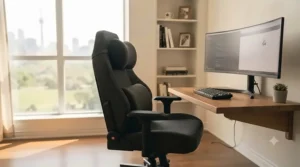
- Consider what’s visible on a video call. If your camera only ever catches the headrest and top of the backrest, you may not need to spend premium dollars on base and armrest aesthetics at all.
- Read aggregated reviews for firmness, not just looks. A chair can look perfectly professional in photos and still feel wrong for your body — cross-check owner feedback on seat firmness before buying.
Practical Usage Guide: Setting Up Your Subtle Gaming Chair Right
Getting the aesthetic right is only half the job — a chair that looks like an office chair should also be adjusted like one from day one. Start by setting seat height so your feet sit flat on the floor with knees roughly level with your hips; on chairs like the Autonomous ErgoChair Pro with a wide 18.5-22 inch range, resist the urge to leave it at the delivery default. Next, dial in lumbar support so it fills the curve of your lower back without pushing you forward — on chairs with independent depth and height dials, like the Secretlab Titan Evo, this takes a few days of small adjustments to get right, not one setting session.
A common first-month mistake is leaving recline tension at the factory setting, which is usually calibrated for an average body weight and feels either too loose or too stiff for many users. Most chairs, including the noblechairs HERO and AndaSeat Kaiser 3, have a tension dial underneath the seat specifically for this. For maintenance, CCOHS recommends periodically readjusting your workstation throughout the day rather than setting once and forgetting, since posture needs shift with fatigue and task type.
Wipe fabric and linen upholstery with a slightly damp microfibre cloth monthly to prevent the dulling that makes neutral fabrics look tired faster than they should, and check caster wheels every few months for hair or dust buildup that can make a quiet chair start squeaking — which somewhat defeats the purpose of buying something unobtrusive in the first place.
Real-World Scenarios: Who Actually Needs a Subtle Gaming Chair
Picture Priya, a UX designer in Toronto working hybrid — three days at a downtown office, two at her condo desk. She games in the evenings but takes client calls most afternoons, so her camera is on more often than her controller. For her, the Autonomous ErgoChair Pro in Cool Gray makes sense: it’s light enough to reposition for different lighting, mesh keeps her cool during long design-review calls, and nobody on a client Zoom has ever asked if it’s a gaming chair.
Now consider Marcus, a competitive Valorant player who streams four nights a week from his apartment bedroom, which doubles as his background on camera. He needs genuine gaming ergonomics for six-hour sessions but doesn’t want a bright red-and-black chair dominating his stream overlay. The Secretlab Titan Evo in Cookies & Cream splits that difference — enough recline and lumbar adjustment for competitive play, restrained enough that it doesn’t compete visually with his setup.
Finally, there’s Aline, a Montreal-based freelance illustrator on a tight budget who mostly needs a chair that survives 8-hour workdays without looking like it belongs in a teenager’s bedroom. The Corsair TC100 Relaxed in grey fits that brief at a price that doesn’t strain a freelance income, even if it means accepting a slightly less plush long-term build than pricier options.
Common Problems (And How to Actually Solve Them)
Problem: The chair looks subtle in photos but arrives with a huge embossed logo on the headrest. Solution: zoom into third-party retailer photos (not just brand marketing shots) before buying, and check if the colourway name explicitly says “limited edition” or “fabric” — those tend to tone down branding more than standard leatherette lines.
Problem: Neutral fabric shows stains faster than expected. Solution: choose PVC or PU leather variants like those available on the AndaSeat Kaiser 3 if you eat at your desk often, since fabric and linen absorb spills more visibly, or apply a fabric protectant spray designed for upholstery.
Problem: The chair is comfortable for gaming but stiff during long work sessions. Solution: adjust recline tension and lumbar depth separately rather than assuming one setting works for both leaned-back gaming posture and upright typing posture — most chairs on this list, including the noblechairs HERO, support distinct settings for each.
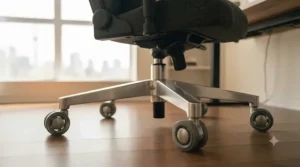
Problem: Casters are too loud or grip carpet awkwardly. Solution: swap to soft-floor or hard-floor caster sets matched to your actual flooring, since most gaming chairs ship with a single universal caster type that isn’t optimized for either surface.
Problem: The chair squeaks after a few months of daily use. Solution: apply a small amount of silicone lubricant (not oil-based, which attracts dust) to the recline mechanism and caster axles every few months as basic maintenance.
Minimalist Gaming Chair vs Traditional Gaming Chair
A minimalist gaming chair and a traditional racing-style gaming chair share the same underlying skeleton — steel or aluminum frame, gas lift, five-star base — but diverge almost entirely in surface details. Traditional gaming chairs lean on contrast piping, bucket-seat bolstering, and branded headrests because that visual language originated with racing seats repurposed for esports, a lineage the Wikipedia article on gaming chairs traces back to the mid-2000s. Minimalist versions of the same chassis, like the Secretlab Titan Evo in Triple Black, simply swap the upholstery and stitching pattern while keeping identical ergonomics underneath.
The practical difference shows up in two places: resale value and social context. A muted colourway tends to hold value slightly better since it appeals to a wider secondhand buyer pool, while a heavily branded esports edition can actually depreciate faster once that team or game falls out of relevance. Socially, a minimalist chair simply blends into more rooms — home offices, shared apartments, video calls — without the visual statement a traditional gaming chair makes by design. Neither is objectively better; the traditional aesthetic exists because plenty of buyers want their setup to look unmistakably like a gaming rig, and that’s a legitimate preference, not a design failure.
Professional-Looking Gaming Chairs for Video Calls and Client Meetings
The chairs that photograph best on video calls share a specific trait: minimal visible hardware. A noblechairs HERO or Autonomous ErgoChair Pro shows almost no branding above the headrest line, which is roughly all a webcam captures during a typical seated call. What most buyers overlook is that armrest colour matters more than backrest colour for video calls, since armrests sit closer to camera height and catch more light — a chair with black upholstery but bright metal or contrast-coloured armrests can still look more “gaming” on camera than the seller photos suggest.
For anyone whose job involves frequent client-facing video calls, prioritizing chairs with fully upholstered, single-tone armrests (rather than exposed metal or plastic in a contrasting shade) will do more for a professional appearance than fabric choice alone. This is one area where the Autonomous ErgoChair Pro‘s all-mesh, monochrome build has a genuine edge over fabric chairs with two-tone stitching.
Gaming Chair That Looks Like an Office Chair: What Actually Changes
When a gaming chair is built to pass as an office chair, three things typically change from a standard racing-style model: seat shape widens (less aggressive side bolstering), upholstery shifts to mesh or matte fabric instead of glossy leatherette, and the base loses the oversized, angular styling common on racing chairs in favour of a simpler five-star profile. The Duramont Ergonomic Office Chair demonstrates this shift most completely among the chairs covered here, since it was designed as an office chair first and only markets itself secondarily to gamers.
What doesn’t change, and what buyers sometimes assume incorrectly, is the underlying gaming-specific engineering — deep recline angles, dedicated lumbar systems, and higher weight capacities remain present even on the most office-like options. You’re not sacrificing gaming performance by choosing a chair that looks like an office chair; you’re simply choosing a different visual skin over comparable mechanics.
Neutral Color Scheme: Choosing Upholstery That Won’t Date
A genuinely neutral color scheme in this category usually means one of four families: charcoal or anthracite, cool grey, off-white or cream, and muted taupe or tan. Reviewers consistently note that pure black, while technically neutral, reads as slightly more “gaming” than true grey or anthracite because black is also the default colour on most budget racing chairs — grey and cream stand out specifically because they’re less common in the category. The AndaSeat Kaiser 3‘s Ash Gray linen and the Secretlab Titan Evo‘s Cookies & Cream fabric both lean into this by choosing shades that are genuinely uncommon among gaming chairs rather than simply the “safe” version of black.
On paper this means: if your goal is a chair that ages well visually over several years of use, cream and taupe tones tend to photograph and wear more like furniture-store upholstery than gaming gear, while grey splits the difference — muted enough to blend in, common enough that fading or slight discoloration over time is less noticeable than it would be on darker fabric.
Understated Design: Features That Actually Matter (And Those That Don’t)
Some features genuinely earn their place on a subtle gaming chair, and some are marketing noise dressed up as substance. Adjustable 4-way lumbar support, as found on the AndaSeat Kaiser 3 and Secretlab Titan Evo, actually matters — it changes daily comfort measurably and is worth prioritizing over almost anything else on this list. Genuine weight-rated steel or aluminum frames matter too, since a chair’s longevity depends far more on frame material than on stitching pattern.
What doesn’t matter nearly as much as marketing suggests: built-in “cooling” gel headrests, which reviewers across multiple chairs describe as staying neutral rather than actively cooling anything, and elaborate stitching patterns that add cost without changing comfort. Massage functions, sometimes bundled into budget chairs, are similarly more novelty than utility according to aggregated owner feedback — a feature that sounds appealing in a product listing but rarely gets used past the first week.
Conference-Room-Appropriate Seating and the Return-to-Office Shift
With Ontario’s provincial government moving staff to five-day in-office schedules and federal public servants required in-office at least four days a week by mid-2026, CBC reported that a significant share of Canadian workers are back at physical desks after years of home flexibility. That shift changes the calculus on gaming chairs for a specific group: people who game at home but now spend meaningfully less time there overall, making a chair that also works as an occasional home-office seat during evening or weekend work more valuable than a chair built purely for marathon gaming sessions.
For workers navigating a hybrid split between a corporate office and a home desk, a conference-room-appropriate chair means one that wouldn’t look out of place if a colleague happened to see it on a video call from home, which realistically rules out anything with visible racing-style bolstering or bright accent panels. The noblechairs HERO and Razer Fujin Pro both fit this brief comfortably, sitting at different ends of the price spectrum but sharing the same design philosophy of staying visually quiet.
Long-Term Cost & Maintenance: What You’re Really Paying For
| Price Tier | Example | Typical Lifespan | Cost-Per-Year (rough) |
|---|---|---|---|
| Budget | Corsair TC100 Relaxed | 2-4 years | ~C$75-150/year |
| Mid-range | noblechairs HERO | 4-6 years | ~C$70-135/year |
| Premium | Secretlab Titan Evo | 6-8+ years | ~C$80-160/year |
Interpreting the numbers above, the cost-per-year gap between budget and premium chairs narrows considerably once you account for lifespan, which is why enthusiast communities so often recommend spending more upfront if the budget allows it. A Corsair TC100 Relaxed replaced twice over eight years can cost roughly the same as a single Secretlab Titan Evo that lasts the whole period, without factoring in the hassle of reassembly and disposal each time. That said, budget chairs make complete sense for short-term needs, rentals, or anyone unsure whether they’ll stick with a home setup long-term.
Maintenance costs stay low across the board — occasional caster replacement (roughly C$15-30 for a set), fabric protectant spray, and the odd replacement gas lift if a chair sees particularly heavy daily use for years. None of the chairs in this guide carry meaningful ongoing costs beyond the initial purchase, which is one advantage gaming chairs hold over some premium ergonomic office furniture with proprietary parts.
Safety, Certifications & Buying Compliance in Canada
Look for chairs rated to SGS-certified gas lifts, which most chairs on this list specify, since this is a basic safety benchmark preventing sudden height collapse under weight. Beyond individual product certifications, Canadian workplace ergonomics guidance from CCOHS references the CSA Z412-17 standard for office ergonomics, which recommends varying sitting posture throughout the day rather than treating any single “correct” position — including a well-adjusted gaming chair — as a complete solution to prolonged sitting.
Weight capacity ratings matter more than most buyers initially assume: exceeding a chair’s rated capacity isn’t just a comfort issue but a genuine safety one, particularly around gas lift failure. If you’re near or above a chair’s stated limit, prioritize models like the AndaSeat Kaiser 3‘s XL sizing or the noblechairs HERO‘s 150 kg rating over chairs closer to the 120 kg range. None of the chairs in this guide make exaggerated safety claims, but always check current weight ratings directly on the retailer listing before buying, since specifications occasionally shift between model years.
Frequently Asked Questions
❓ Is a subtle gaming chair as comfortable as a regular gaming chair?
❓ Can a gaming chair really pass as an office chair on video calls?
❓ Are neutral color gaming chairs more expensive than bold ones?
❓ What's the best gaming chair color for a home office?
❓ Do minimalist gaming chairs sacrifice ergonomic features for style?
Conclusion
A subtle gaming chair isn’t a compromise between comfort and professionalism — it’s proof you don’t have to choose. Every chair in this guide, from the budget-friendly Corsair TC100 Relaxed to the boardroom-blending Razer Fujin Pro, delivers genuine gaming-grade ergonomics wrapped in upholstery that won’t draw a second glance on a client call. The real decision isn’t aesthetics versus function; it’s matching your budget, body type, and how often that chair ends up on camera to the right option among the seven above.
If you’re mostly gaming with occasional video calls, lean toward comfort-first picks like the Secretlab Titan Evo or AndaSeat Kaiser 3. If your desk sees more spreadsheets than scoreboards, the Autonomous ErgoChair Pro or Duramont Ergonomic Office Chair will serve you better day to day. And if you genuinely need one chair to disappear into any room you put it in, the noblechairs HERO and Razer Fujin Pro sit at opposite price points but share the same quiet confidence.
✨ Ready to upgrade your setup? Check current pricing on today’s pick before it changes — comfortable, professional, and finally unremarkable in all the right ways.
Recommended for You
- Nintendo Switch Gaming Chair: 7 Comfy Picks for 2026
- Tournament Gaming Chair 2026: 7 Picks That Survive Marathon Sessions
- Best Work Gaming Chair Canada 2026: 7 Picks That Actually Deliver
Disclaimer: This article contains affiliate links. As an Amazon Associate, I earn from qualifying purchases. If you purchase products through these links, we may earn a small commission at no additional cost to you.
✨ Found this helpful? Share it with your friends! 💬🤗
